Does Saturated Fat Raise Apob?
Understanding ApoB and Why Saturated Fat Matters
TL;DR: Saturated fat can raise ApoB in many people, mainly by increasing the number of LDL and other ApoB-containing particles. The effect varies by genetics, insulin sensitivity, diet quality, and what saturated fat replaces in the diet.
Yes, saturated fat can raise ApoB, especially when intake is high or when it replaces unsaturated fats, soluble fibre, and minimally processed carbohydrate sources. ApoB matters because it reflects the number of atherogenic lipoprotein particles that can enter the artery wall and contribute to plaque formation.
ApoB, or apolipoprotein B, is found on LDL, VLDL, IDL, and other particles involved in atherosclerosis. Each of these particles carries one ApoB molecule, so ApoB is a practical marker of particle number rather than just cholesterol content.
This makes the saturated fat question important for long-term cardiovascular prevention and healthy aging. LDL-C may rise with saturated fat, but ApoB helps show whether the number of potentially plaque-forming particles has also increased. For the broader strategy, read the best ApoB optimization plan. Learn more in our complete guide to longevity.
What Is Saturated Fat and How Does It Affect Lipids?
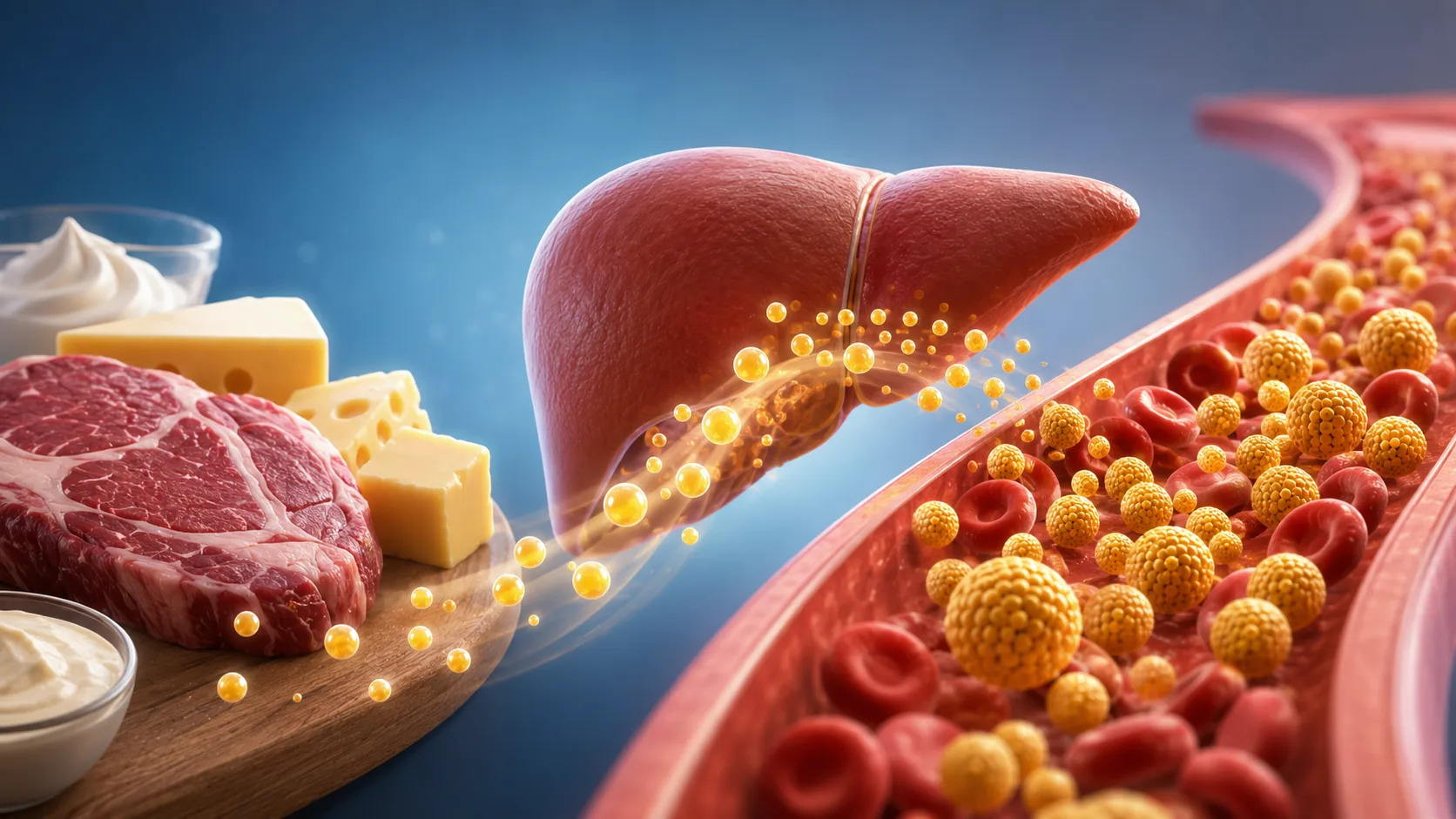
Saturated fat is a type of dietary fat found in foods such as butter, cheese, cream, fatty cuts of meat, processed meats, coconut oil, palm oil, and many baked or packaged foods. It is not automatically harmful in every context, but higher saturated fat intake can unfavourably affect LDL-C and ApoB in many people.
The effect depends partly on replacement. Replacing saturated fat with polyunsaturated fats, monounsaturated fats, or high-fibre whole foods tends to improve lipid markers. Replacing saturated fat with refined carbohydrates or sugar may lower LDL-C in some cases but can worsen triglycerides, insulin resistance, and overall cardiometabolic risk.
This distinction is important because ApoB sits within a broader cardiometabolic framework. Saturated fat intake, insulin resistance, weight status, genetics, fibre intake, triglycerides, and LDL receptor activity can all influence ApoB levels.
For people with elevated ApoB, saturated fat is one of the first dietary variables worth reviewing. It is especially relevant if ApoB rose after increasing butter, cream, cheese, fatty meat, coconut oil, or a very high-fat low-carbohydrate diet.
Does Saturated Fat Raise ApoB?
Current evidence supports that saturated fat can raise ApoB in many individuals, although the size of the effect varies. The most common pattern is an increase in LDL-C and LDL particle burden, which can raise ApoB because each LDL particle contains one ApoB molecule.
This does not mean every person responds the same way. Some people see only modest changes, while others experience large increases in LDL-C and ApoB. Genetics, baseline ApoB, thyroid function, body weight, insulin sensitivity, and the overall diet pattern all affect the response.
The effect can be particularly noticeable in some people following ketogenic or very-low-carb diets high in saturated fat. If ApoB rises significantly in that context, the issue may not be carbohydrate restriction alone, but the combination of high saturated fat intake, low fibre intake, weight changes, and individual lipid response. See also whether keto can raise ApoB.
The Mechanisms Behind Saturated Fat and ApoB Levels
Saturated fat may raise ApoB largely by influencing LDL receptor activity and liver lipid metabolism. When LDL clearance is reduced, ApoB-containing particles remain in circulation for longer, which can increase measured ApoB.
In simple terms, saturated fat can make it harder for the liver to remove LDL particles efficiently in some people. More circulating LDL particles means more ApoB. Over time, a higher ApoB particle burden can increase exposure of the artery wall to atherogenic particles.
Saturated fat can also interact with insulin resistance and triglyceride metabolism. When insulin resistance is present, the liver may produce more VLDL particles, which also contain ApoB. In that situation, saturated fat reduction may help, but improving metabolic health is also important. For more detail, read how insulin resistance may raise ApoB.
The practical takeaway is not that saturated fat must be eliminated completely. The more useful question is whether a person’s ApoB improves when saturated fat is replaced with unsaturated fats, soluble fibre, legumes, nuts, seeds, olive oil, and minimally processed foods.
Practical Tips for Managing Saturated Fat and ApoB
The most practical first step is to test ApoB, then change one major dietary variable at a time. If ApoB is elevated, reducing saturated fat for 8–12 weeks and retesting can show whether it is a meaningful driver for that individual.
Useful substitutions include replacing butter with olive oil, fatty processed meats with fish or leaner protein, cream-heavy meals with higher-fibre meals, and coconut oil with unsaturated fat sources. Increasing soluble fibre from oats, beans, lentils, fruit, vegetables, and psyllium can further support ApoB reduction.
For many people, the best results come from combining saturated fat moderation with weight management, resistance training, aerobic exercise, improved sleep, and better insulin sensitivity. If ApoB remains high despite strong lifestyle changes, medical options should be discussed with a qualified clinician.
Supplements can help in specific contexts, but they should not distract from the main levers. Fibre is often more directly relevant to ApoB than omega-3, while omega-3 is more useful for triglyceride optimisation. Red yeast rice or berberine may affect lipid markers, but quality, safety, and medication interactions need careful consideration.
References and Resources
These resources provide further reading on saturated fat, lipoproteins, ApoB, and cardiovascular risk.
Authoritative Sources on Saturated Fat and ApoB
-
American Heart Association: Saturated Fats
heart.orgProvides guidance on saturated fat intake and its relationship with LDL cholesterol and cardiovascular risk.
-
NCBI – Effects of Dietary Fats on ApoB
ncbi.nlm.nih.govReviews how different dietary fats can influence ApoB-containing lipoproteins.
-
Mayo Clinic: Cholesterol and Heart Disease
mayoclinic.orgExplains cholesterol, dietary fat, and cardiovascular risk in practical clinical language.
-
PubMed – Dietary Fats and Lipoproteins
pubmed.ncbi.nlm.nih.govScientific research on how dietary fats influence lipoprotein particles and related risk markers.
-
Heart Foundation: Lipid Management
heartfoundation.org.auClinical guidance on lipid management and cardiovascular prevention.
-
British Nutrition Foundation: Dietary Fats
nutrition.org.ukOverview of dietary fat types and their role in health.
-
Circulation Journal – Lipoprotein Particle Research
ahajournals.orgPeer-reviewed research on lipoprotein particles, ApoB, and cardiovascular risk.

Frequently Asked Questions
Does saturated fat directly increase ApoB levels?
It can. Saturated fat often raises LDL-C and can increase the number of ApoB-containing particles, especially in people who are sensitive to dietary saturated fat.
Can replacing saturated fat with healthier fats lower ApoB?
Yes, replacing saturated fat with unsaturated fats from olive oil, nuts, seeds, avocado, and fish can lower ApoB in many people, particularly when the overall diet is high in fibre and minimally processed foods.
What dietary changes help manage ApoB?
Key steps include reducing saturated fat, increasing soluble fibre, eating more legumes and vegetables, choosing unsaturated fats, limiting ultra-processed foods, and improving insulin sensitivity through diet and exercise.
Is saturated fat the only factor that raises ApoB?
No. ApoB can also be influenced by genetics, insulin resistance, body weight, thyroid function, kidney health, menopause, medications, and overall dietary pattern.
Should everyone avoid saturated fat completely?
Complete avoidance is usually unnecessary. The practical goal is to keep saturated fat moderate, prioritise unsaturated fats and fibre, and use ApoB testing to see how your own body responds.
Conclusion
Saturated fat can raise ApoB in many people by increasing the number or persistence of ApoB-containing lipoproteins, especially LDL particles. The response is individual, but ApoB testing can show whether saturated fat is a meaningful driver of cardiovascular risk in a specific person.
For ApoB optimisation, the most practical approach is to moderate saturated fat, replace it with unsaturated fats and high-fibre foods, improve insulin sensitivity, and retest. This keeps the focus on long-term cardiometabolic prevention rather than one isolated dietary rule.
Find out more information about “Saturated Fat Raise ApoB”
Search for more resources and information: