
Can You Have Low Ldl but High Apob?
Understanding LDL and ApoB: What Do They Really Measure?
TL;DR: Yes, you can have low LDL-C but high ApoB. This usually means each LDL particle carries less cholesterol, but the total number of artery-relevant particles remains high.
Yes, it is possible to have low LDL cholesterol but high ApoB. LDL-C measures the amount of cholesterol inside LDL particles, while ApoB estimates the number of atherogenic particles that can contribute to plaque formation. If LDL particles are small or cholesterol-poor, LDL-C can look reassuring while ApoB remains elevated.
This matters because ApoB-containing particles are the particles that can enter the artery wall and contribute to atherosclerosis over time. LDL-C is still useful, but ApoB can reveal cardiovascular risk that LDL-C alone may miss. For the wider prevention framework, see the best ApoB optimization plan. Learn more in our complete guide to longevity.
ApoB is especially helpful when LDL-C and metabolic health markers do not match. High triglycerides, insulin resistance, low HDL-C, abdominal fat, fatty liver, or type 2 diabetes can all increase the chance of discordance between LDL-C and ApoB.
Can You Have Low LDL but High ApoB?
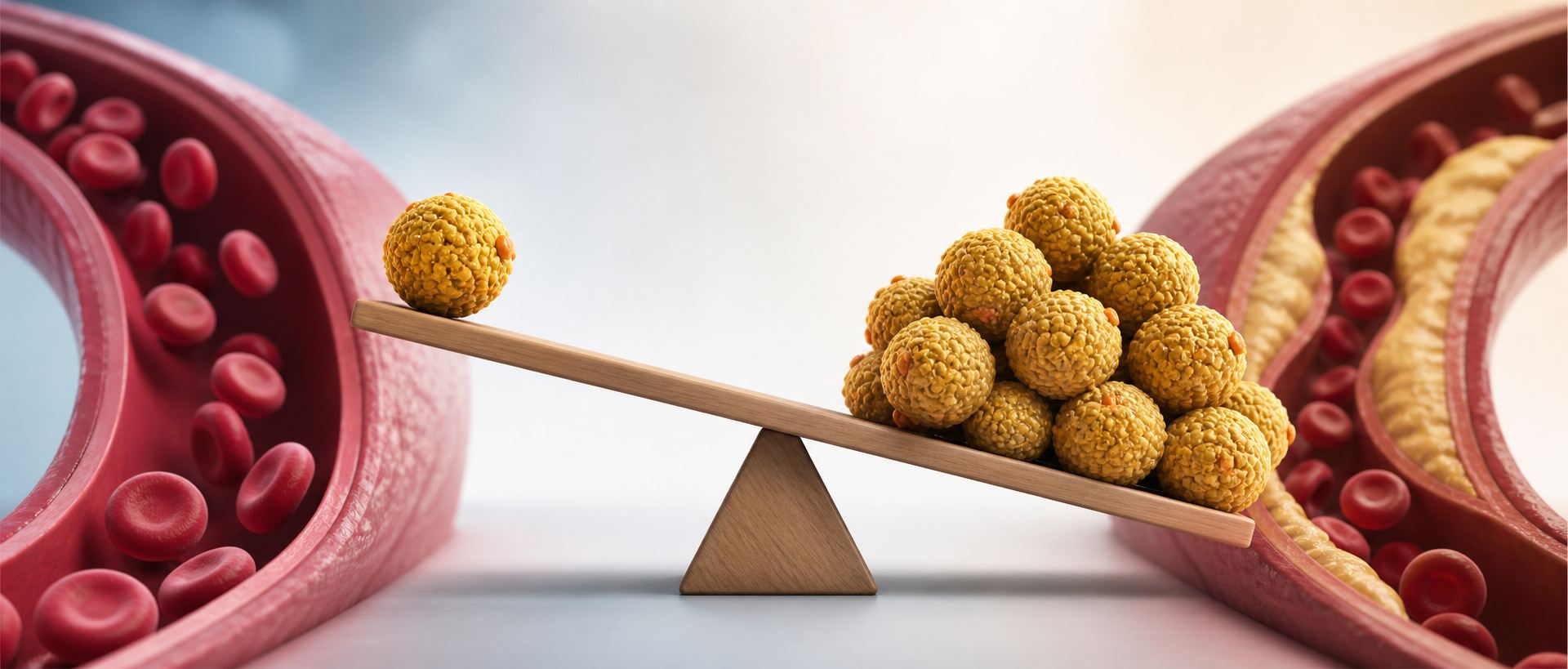
You can have low LDL-C but high ApoB when the blood contains many atherogenic particles, even if each particle carries a smaller amount of cholesterol. In this situation, the LDL-C number may underestimate the number of particles capable of contributing to plaque.
This pattern is often called LDL-C and ApoB discordance. It is not rare, and it is one reason ApoB testing is useful in cardiometabolic risk assessment. A standard lipid panel can look acceptable while ApoB suggests a higher particle burden.
The practical meaning is simple: low LDL-C does not always guarantee low atherosclerotic risk. ApoB helps clarify whether the number of artery-relevant particles is genuinely low. For more background, read whether ApoB is more important than LDL.
Why Low LDL and High ApoB Can Happen
Low LDL-C with high ApoB usually happens when particle number and cholesterol content separate. The most common reason is a higher number of smaller, cholesterol-poor LDL particles. LDL-C may stay low because each particle contains less cholesterol, but ApoB rises because there are more particles overall.
Insulin resistance is one of the most important drivers. When metabolism becomes less efficient at handling glucose and triglycerides, the liver may produce more VLDL particles. These can become LDL particles later, increasing ApoB even when LDL-C does not look high. This is why ApoB should be interpreted alongside triglycerides, HDL-C, fasting glucose, HbA1c, waist circumference, blood pressure, and liver health.
Other contributors can include genetics, weight gain, visceral fat, high refined carbohydrate intake, excess alcohol, some ketogenic or very high saturated fat diets, and individual response to lipid-lowering medication. In some people, LDL-C falls more than ApoB, leaving residual particle risk.
What This Means for Heart Disease Risk
High ApoB indicates a higher number of atherogenic particles. These particles can enter the artery wall, become retained, and contribute to plaque development. That does not mean ApoB is the only cardiovascular risk marker, but it is one of the most relevant lipid markers for long-term prevention.
If LDL-C is low but ApoB is high, the main concern is hidden particle burden. This can be especially important in people with insulin resistance, metabolic syndrome, high triglycerides, or a family history of early cardiovascular disease. In these cases, relying only on LDL-C may give an incomplete picture.
ApoB should still be interpreted in context. Blood pressure, smoking status, inflammation, Lp(a), glucose control, kidney function, age, family history, and existing plaque all affect risk. ApoB is a powerful marker, but it works best as part of a broader cardiometabolic assessment. For a related mechanism, see how ApoB-containing particles contribute to plaque.
How to Manage Low LDL but High ApoB
The first step is to confirm the result with a repeat ApoB test and a full lipid panel, ideally including triglycerides, HDL-C, non-HDL-C, LDL-C, and, where appropriate, Lp(a). If ApoB remains high, the goal is to reduce the number of atherogenic particles rather than focusing only on LDL-C.
For many people, the highest-impact levers are improving insulin sensitivity and reducing triglyceride-rich particle production. This usually means reducing excess body fat if needed, building regular exercise into the week, increasing dietary fibre, improving sleep, limiting alcohol if triglycerides are elevated, and replacing refined carbohydrates with minimally processed foods.
Dietary fat quality also matters. Some people see ApoB rise with high saturated fat intake, even when other markers look good. In that case, replacing some saturated fat with unsaturated fats from olive oil, nuts, seeds, avocado, and oily fish may help. Soluble fibre from oats, beans, lentils, psyllium, fruit, and vegetables can also support lower ApoB by improving cholesterol handling.
Supplements may be useful, but they should not be the foundation. Fibre supplements such as psyllium can help lower LDL-C and ApoB modestly. Omega-3s are more relevant for high triglycerides than directly lowering ApoB. Berberine, red yeast rice, and other lipid-focused supplements may have a role for some people, but quality, safety, interactions, and medical oversight matter. Medication may be appropriate when ApoB remains high or overall risk is elevated.
References and Resources
These resources provide further reading on ApoB, LDL-C, lipoprotein particle number, and cardiovascular risk interpretation.
Authoritative Sources on Low LDL but High ApoB
-
The Role of ApoB in Cardiovascular Disease
ncbi.nlm.nih.govExplains why ApoB can provide cardiovascular risk information beyond LDL cholesterol alone.
-
Understanding Cholesterol: LDL, HDL, and Beyond
heart.orgA practical overview of cholesterol, lipoproteins, and cardiovascular risk markers.
-
Lipoproteins and Cardiovascular Disease Risk
ncbi.nlm.nih.govDiscusses the relationship between lipoprotein particles, ApoB, and cardiovascular disease risk.
-
European Atherosclerosis Society
eas.orgScientific resources and consensus materials on atherosclerosis, lipid management, and ApoB relevance.
-
Mayo Clinic – Cholesterol Testing
mayoclinic.orgPatient-friendly information on cholesterol testing and cardiovascular risk assessment.
-
American Heart Association – Fats and Lipids
heart.orgGuidance on dietary fats and how food choices can influence lipid profiles.
-
Research on Lipoprotein Particle Numbers
ncbi.nlm.nih.govReviews why particle number can matter when cholesterol concentration and particle burden are discordant.

Frequently Asked Questions
Frequently Asked Questions
Can I have normal LDL levels but still be at risk for heart disease?
Yes. LDL-C can look normal while ApoB is elevated, especially when there are many small or cholesterol-poor particles. This may indicate higher particle-related risk than LDL-C alone suggests.
Is it possible to have low LDL but high ApoB without any symptoms?
Yes. High ApoB does not usually cause symptoms. It is a blood marker that reflects long-term particle burden and cardiovascular risk, so testing is the only way to identify this pattern.
What should I do if my LDL is low but ApoB is high?
Repeat the test, review triglycerides and metabolic markers, and discuss the result with a clinician. The next step is usually to identify drivers such as insulin resistance, diet pattern, genetics, weight, alcohol intake, or medication response.
How can I lower ApoB if my LDL cholesterol is already low?
Focus on particle burden rather than LDL-C alone. Improving insulin sensitivity, reducing triglycerides, increasing soluble fibre, optimising body composition, exercising regularly, and adjusting dietary fat quality can help. Medication may be appropriate if risk remains elevated.
Does a high ApoB always mean high risk?
High ApoB usually indicates higher atherogenic particle burden, but total risk depends on the full context. Blood pressure, Lp(a), smoking, diabetes, inflammation, family history, and existing plaque all affect interpretation.
Conclusion
Low LDL-C and high ApoB can occur when the number of atherogenic particles is high but each particle carries less cholesterol. This matters because ApoB better reflects the particle burden that can contribute to plaque formation over time.
The practical response is not to panic, but to investigate. ApoB should be interpreted alongside triglycerides, HDL-C, glucose control, blood pressure, body composition, family history, and overall cardiovascular risk. If ApoB remains high, reducing particle burden through diet, exercise, weight management, fibre, metabolic optimisation, and medical guidance can support long-term cardiometabolic health.
Find out more information about “You Have Low LDL but High ApoB”
Search for more resources and information: