How Does Gut Barrier Function Decline With Age?
Introduction
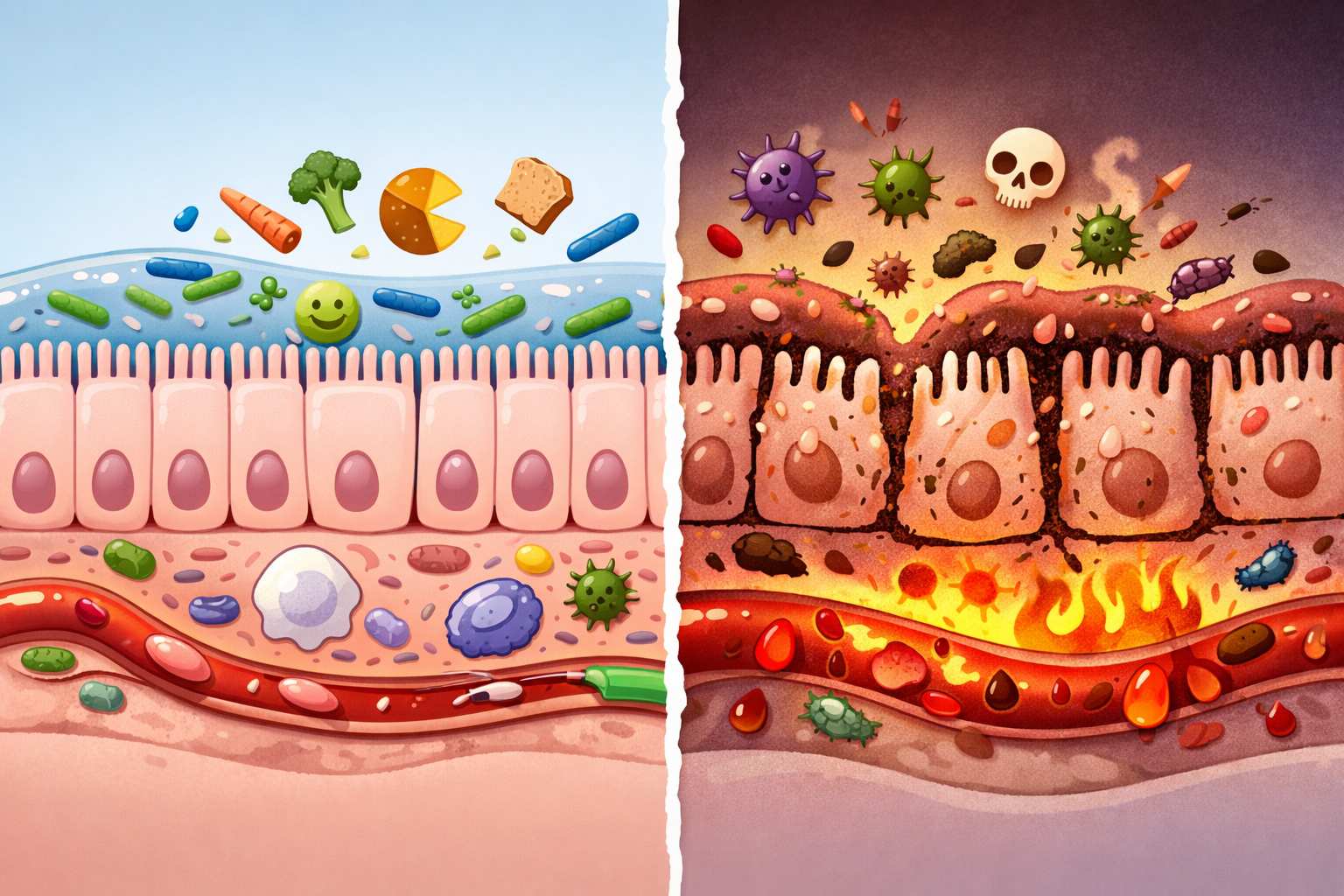
Gut barrier function can decline with age, and this shift may have important consequences for inflammation, immune regulation, nutrient absorption, and overall healthspan. The gut barrier is one of the body’s most important protective systems. When it works well, it helps maintain a selective boundary between the contents of the digestive tract and the bloodstream. When it weakens, the body may become more vulnerable to low-grade inflammation, microbial byproducts, and broader metabolic stress.
This matters because aging is not only about visible physical change. It also involves gradual shifts in internal systems that influence resilience, recovery, and disease risk. The gut barrier sits at the center of several of these systems, including the microbiome, immune system, and inflammatory response. In longevity science, this makes gut barrier integrity highly relevant to healthy aging. Learn more in our complete guide to longevity.
This article explores how gut barrier function changes with age, what drives that decline, and which strategies may help preserve gut integrity over time. Understanding this process can help support better digestion, lower inflammatory burden, and stronger long-term wellbeing.
Understanding Gut Barrier Function and Aging
What Is the Gut Barrier, and Why Is It Important?
The gut barrier is a multilayered protective system made up of intestinal cells, tight junction proteins, mucus, immune factors, and the gut microbiome. Its role is to allow nutrients and water to pass into the bloodstream while keeping harmful microbes, toxins, and undigested particles from crossing too easily. When this system is functioning well, it supports digestion, immune balance, and metabolic health.
This barrier is important because it helps control the interface between the external environment inside the gut and the body’s internal circulation. If gut barrier integrity weakens, intestinal permeability may increase. This can allow more inflammatory compounds and microbial fragments to enter circulation, which may contribute to immune activation and chronic low-grade inflammation.
For this reason, gut barrier function matters far beyond digestion. It is connected to systemic inflammation, immune resilience, and broader patterns of healthy aging.
Research suggests that gut barrier function often does decline with age. The decline is not identical in every person, but many older adults experience changes in gut structure, microbiome composition, immune signaling, and cellular repair capacity that can weaken barrier integrity over time.
These changes may increase the likelihood of intestinal permeability, inflammation, and metabolic stress. They may also make the body more sensitive to poor diet, chronic stress, infections, and other factors that place strain on the gut. This is one reason gut health is increasingly recognized as a meaningful contributor to healthspan and longevity.
Although aging influences gut function naturally, lifestyle choices still matter. Diet quality, exercise, sleep, stress management, and microbiome support can all affect how well the gut barrier is maintained across the lifespan.
Physiological Changes in the Gut with Age
Structural Changes in the Intestinal Lining
One important feature of aging is that the intestinal lining may become less robust. The villi and microvilli, which help increase surface area for absorption, may become less efficient over time. Cellular turnover can also slow, which means the gut lining may not repair itself as effectively after stress or injury.
These structural shifts may reduce nutrient absorption and weaken the physical barrier between the gut lumen and the bloodstream. Oxidative stress and chronic low-grade inflammation may further damage intestinal cells, making the barrier more vulnerable. This is one reason older adults may be more susceptible to both malabsorption and barrier dysfunction.
Supporting cellular repair through good nutrition, better metabolic health, and lower inflammatory burden may help reduce the impact of these structural changes.
Alterations in Gut Microbiota Composition
The gut microbiome also tends to change with age. In many people, microbial diversity declines and the balance between beneficial and potentially harmful organisms shifts. Beneficial bacteria that help support the gut lining and produce helpful metabolites, such as short-chain fatty acids, may become less abundant.
These microbiome changes can weaken the mucosal barrier, reduce anti-inflammatory signaling, and increase exposure to microbial products that promote immune activation. Because the microbiome plays such a central role in barrier integrity, age-related microbial shifts are one of the most important reasons gut barrier function may decline over time.
Diets rich in fiber, fermented foods, and plant diversity may help support a more favorable microbiome. This, in turn, may help preserve gut barrier health and reduce age-related inflammatory stress.
Factors Contributing to Decline in Gut Barrier Integrity
Oxidative Stress and Inflammation
Oxidative stress is one of the major contributors to gut barrier decline with age. As the body ages, free radical production often increases while repair systems become less efficient. This can damage intestinal cells, weaken tight junctions, and increase permeability.
Chronic inflammation compounds the problem. Persistent low-grade inflammation can disrupt the gut lining, impair cellular renewal, and create a cycle in which barrier dysfunction and inflammation reinforce each other. This is relevant to healthy aging because chronic inflammation is associated with many age-related diseases, including cardiometabolic disorders and neurodegeneration.
Reducing inflammatory burden through better diet, regular movement, sleep optimization, and stress management may therefore help protect gut integrity as the body ages.
Diet and Lifestyle Factors
Diet and lifestyle strongly influence how quickly gut barrier function declines. Diets high in processed foods, refined sugar, excess alcohol, and unhealthy fats may worsen inflammation and damage the intestinal lining. Chronic stress, poor sleep, and sedentary behavior may further disrupt immune regulation and gut repair.
In contrast, a whole-food diet rich in fiber, polyphenols, healthy fats, and minimally processed ingredients may help support the gut barrier. Stress management, regular exercise, and adequate sleep also appear to support both the microbiome and the integrity of the intestinal lining.
This means age-related decline is not purely fixed. Biology matters, but daily habits can meaningfully influence how well the gut barrier is preserved over time.
Mechanisms Behind the Decline
Several biological mechanisms help explain why gut barrier function declines with age. These include slower cellular renewal, greater apoptosis, reduced mucus production, altered immune signaling, and weaker tight junction function. Tight junction proteins are especially important because they act as seals between intestinal cells and help prevent excessive leakage.
When these seals become less effective, intestinal permeability may increase. That allows more bacterial fragments, toxins, and inflammatory compounds to cross into circulation. Over time, this can place more strain on the immune system and contribute to systemic inflammation.
Nutrients such as zinc, amino acids such as glutamine, and a diet that supports microbiome health may help support some of these protective mechanisms, although the broader lifestyle pattern remains the most important factor.
Impact on Overall Health
Declining gut barrier function can affect far more than digestion. Increased permeability may allow inflammatory compounds and microbial products to enter circulation, triggering immune activation and raising chronic inflammatory burden. This may influence cardiovascular health, insulin sensitivity, immune resilience, and even cognitive health.
In this way, gut barrier decline is relevant to healthspan as well as disease prevention. A weaker gut barrier may increase vulnerability to several conditions commonly associated with aging, while a healthier barrier may help support resilience, recovery, and metabolic stability.
This is why preserving gut integrity is increasingly viewed as part of a broader longevity strategy rather than a narrow digestive concern.
How Gut Barrier Function Declines With Age
How the process unfolds over time
Gut barrier decline with age usually does not happen all at once. It tends to develop gradually through a combination of structural changes, microbial shifts, immune dysregulation, oxidative stress, and environmental exposures. A younger gut may recover more easily from poor diet, stress, infection, or medication use, while an older gut often shows less flexibility and slower repair.
As these pressures accumulate, the gut barrier may become less selective and more inflammatory signals may reach the immune system. This can contribute to a state of chronic low-grade inflammation that affects not only the gut but the whole body. In aging biology, this pattern is highly significant because it may influence the pace of physiological decline.
The encouraging point is that the process is modifiable. Although age increases vulnerability, it does not make gut barrier decline untouchable. Better daily habits can still support a healthier internal environment and reduce some of the pressures driving this change.
Why this matters for longevity
Longevity is not only about living longer. It is also about preserving function, energy, immune balance, and metabolic health across the lifespan. Because the gut barrier is involved in each of these systems, its decline may have outsized effects on healthspan.
A more resilient gut barrier may help reduce systemic inflammation, improve nutrient utilization, support a healthier microbiome, and lower exposure to harmful microbial products. These effects are especially valuable in later life, when recovery becomes less efficient and disease risk begins to rise more sharply.
For that reason, supporting gut barrier function can be seen as a practical and meaningful component of healthy aging.
Strategies to Support Gut Barrier Health as We Age
Dietary and Supplement Support
A nutrient-dense diet is one of the strongest tools for supporting gut barrier health. Fiber-rich vegetables, legumes, fruit, nuts, seeds, and whole plant foods may help support beneficial microbes and the compounds they produce. Fermented foods such as kefir, yogurt, sauerkraut, and kimchi may also support microbial diversity in some people.
Polyphenol-rich foods, omega-3 fats, and adequate protein may help reduce inflammatory stress and support tissue repair. Supplements such as zinc and glutamine are sometimes used to support gut lining health, although they work best when combined with broader dietary and lifestyle improvements rather than used as isolated solutions.
Reducing highly processed foods, excess sugar, and alcohol may also help reduce the pressures that weaken the gut barrier over time.
Lifestyle Habits for Gut Health
Lifestyle habits matter just as much as diet. Chronic stress can increase intestinal permeability, so stress management is a meaningful part of gut health. Practices such as meditation, breathing exercises, walking, and better recovery routines may help reduce the physiological strain that affects the gut barrier.
Sleep quality is also important because poor sleep is linked to higher inflammation, worse metabolic regulation, and weaker recovery. Regular physical activity, including both aerobic exercise and strength training, may support microbiome diversity, immune balance, and broader metabolic health.
The most effective approach is usually holistic. Better food, better sleep, better stress management, and regular movement create a more supportive environment for maintaining gut barrier integrity across the lifespan.
References and Resources
These resources provide useful background on gut barrier dysfunction, microbiome aging, intestinal permeability, and strategies that may help preserve gut integrity over time:
Authoritative Sources on Does Gut Barrier Function Decline With Age
- The Role of Gut Barrier Dysfunction in Disease
nih.gov
Explains the biological mechanisms of gut barrier dysfunction and how impaired barrier integrity contributes to chronic disease and inflammation.
- Microbiota and Aging: Implications for Gut Barrier Function
nih.gov
Discusses how age-related changes in the microbiome can influence intestinal permeability and barrier stability.
- World Health Organization: Diet and Gut Health
who.int
Provides broad guidance on diet and nutrition that is relevant to supporting digestive and metabolic health.
- Leaky Gut Syndrome: What You Need to Know
healthline.com
A readable overview of intestinal permeability, common drivers of gut barrier dysfunction, and supportive lifestyle habits.
- Aging and the Gut Microbiome
nih.gov
Reviews the relationship between aging, microbiome composition, immune function, and gut permeability.
- Supporting Gut Health with Diet
medicalnewstoday.com
Summarizes dietary approaches that may help support gut barrier integrity and microbiome balance.
- NIH: Gut Health and Aging
nih.gov
Provides research summaries related to gut health, aging biology, and emerging interventions.
- Gut Microbiota and Aging: A Scientific Review
nature.com
A detailed scientific review of how microbiota changes with age and how those changes may affect gut barrier health and inflammation.
Frequently Asked Questions
Frequently Asked Questions
Does gut barrier function decline with age?
Yes, gut barrier function often declines with age. Structural changes in the intestinal lining, shifts in the microbiome, slower cellular repair, and higher inflammatory burden can all make the gut barrier less resilient over time.
That said, the decline is not fixed in every case. Diet, lifestyle, sleep, stress levels, and microbiome support can all influence how well gut integrity is maintained as the body ages.
What are the main causes of gut barrier decline with age?
The main contributors include oxidative stress, chronic inflammation, microbiome imbalance, reduced cellular renewal, poorer diet, high stress, and inadequate sleep. These factors can weaken the intestinal lining and disrupt tight junction function.
Can lifestyle changes improve gut barrier function in older adults?
Yes. A fiber-rich diet, regular exercise, stress management, better sleep, and lower intake of processed foods and alcohol may all help support gut barrier integrity. These habits can reduce inflammation and improve the gut environment over time.
What dietary strategies support gut barrier health with age?
Helpful strategies include eating more whole plant foods, increasing fiber intake, including fermented foods when tolerated, and ensuring adequate intake of supportive nutrients such as zinc and protein. Reducing ultra-processed foods and excess sugar may also help protect the gut barrier.
Conclusion
Gut barrier function often declines with age through a combination of structural changes, microbiome shifts, oxidative stress, and chronic inflammation. As this barrier becomes less resilient, the body may become more vulnerable to intestinal permeability, immune activation, and broader health problems that affect healthspan.
The encouraging message is that gut barrier health is modifiable. A supportive diet, regular movement, good sleep, lower stress, and attention to microbiome health can all help preserve gut integrity and reduce some of the pressures that drive decline. For anyone interested in healthy aging, gut barrier support is a practical and valuable part of a broader longevity strategy.
Find out more information about “Does Gut Barrier Function Decline With Age”
Search for more resources and information: