Can Group Music Improve Social Connectedness and Healthspan?
Introduction
TL;DR: Yes, group music can improve social connectedness and healthspan by reducing loneliness, strengthening social bonds, lifting mood, and supporting cognitive and physical health. Singing, drumming, or playing music with others is a practical way to build community while supporting healthier aging.
Group music can improve social connectedness and healthspan because it combines social bonding, emotional regulation, cognitive stimulation, and light-to-moderate physical activity in one shared experience. Singing in a choir, joining a drumming circle, or playing in a community band can help people feel more connected while also supporting mental and physical well-being.
This matters because social isolation, chronic stress, and low activity levels are all linked to poorer health outcomes with aging. Group music addresses several of these at once. It creates shared purpose, encourages regular participation, and can make healthy behavior easier to sustain over time.
Research suggests that social relationships are a major driver of healthspan, and group music may help by increasing belonging, reducing stress, and supporting brain health. Learn more in our complete guide to longevity.
Understanding the impact of group music on social connectedness
How does group music strengthen social bonds?
Group music works partly because it brings people into sync. Singing together, clapping in rhythm, or playing a shared beat creates coordination between attention, movement, and emotion. That shared timing often leads to a stronger sense of trust, belonging, and unity.
Unlike passive entertainment, group music is participatory. People listen, respond, adapt, and create something together. This can lower social barriers and make interaction feel more natural, especially for people who find ordinary conversation difficult or draining.
Why social connectedness matters for healthy aging
Social connectedness is strongly linked to mental health, resilience, and long-term well-being. People who feel supported and included often cope better with stress, maintain healthier routines, and report higher life satisfaction. These factors can influence healthspan just as much as exercise and nutrition.
Group music can be especially useful because it provides structure and repetition. Regular rehearsals, shared goals, and performance or participation routines help create lasting relationships rather than one-off interactions. That consistency is one reason group music improves social connectedness and healthspan in a meaningful way.
Why music can feel uniquely bonding
Music carries emotional meaning. A shared song or rhythm can create connection faster than many other group activities because it involves listening, expression, memory, and coordinated action at the same time. Research suggests this type of synchrony may support feelings of closeness and social trust.
For older adults, people living alone, or anyone facing loneliness, group music can offer both community and routine. It is often easier to join a choir, singing group, or drum circle than to enter a purely social club without a shared activity.
How group music can enhance healthspan
Emotional and psychological benefits
Group music often improves mood and reduces perceived stress. Singing or playing music with others can create enjoyment, emotional release, and a sense of achievement. These effects may support better mental health, which is closely tied to healthy aging.
It can also help reduce loneliness and improve emotional resilience. When people feel connected and purposeful, they are more likely to stay engaged with life. That matters for healthspan because long-term well-being is not only about disease risk, but also about maintaining meaning, energy, and social vitality.
Cognitive benefits of shared musical activity
Music is mentally demanding. Group music uses attention, timing, memory, listening, and coordination. Following a melody, entering at the right moment, or keeping rhythm with others challenges the brain in ways that may help preserve cognitive function.
Research suggests musical engagement may support executive function, memory, and processing speed. In group settings, there is the added benefit of real-time interaction, which strengthens attention and adaptability. This helps explain why group music improves social connectedness and healthspan rather than acting only as a leisure activity.
Physical and physiological effects
Group music can also support physical health. Singing involves breath control and posture. Drumming and movement-based music activities add coordination and light exercise. Dancing or rhythm-based participation can raise heart rate, support endurance, and improve mobility.
Even when the physical demand is moderate, regular participation may help offset inactivity. Over time, this can support cardiovascular health, balance, and energy levels. The fact that music is enjoyable also makes it easier to continue than some formal exercise programs.
Healthspan, not just lifespan
Healthspan refers to the years lived in relatively good health, with independence and quality of life. Group music may support healthspan by improving several key areas at once: social integration, mood, cognition, movement, and routine.
That combination matters. A person who feels connected, mentally stimulated, and emotionally supported is often more likely to remain active and engaged. This is one of the strongest arguments for using group music as part of a healthy aging strategy.
Practical ways to use group music for connection and healthy aging
Choose a form of group music that feels accessible
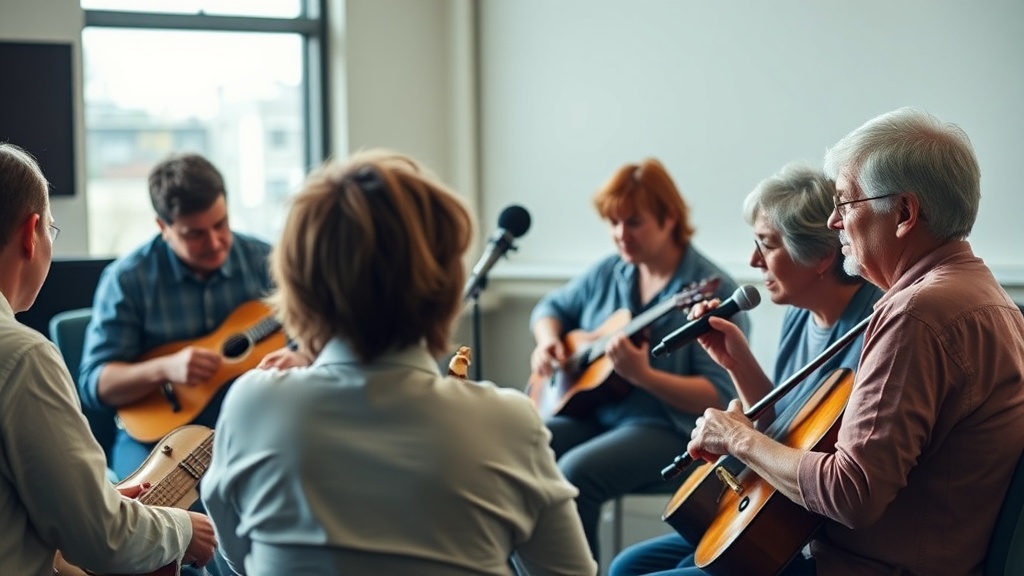
Group music does not have to mean formal performance. Good options include community choirs, ukulele groups, drumming circles, singing-for-wellness sessions, church music groups, and informal jam sessions. The best format is one that feels welcoming and sustainable.
Beginners often do well in settings where skill level is mixed and participation matters more than technical perfection. The social and health benefits come from regular engagement, not elite ability.
Prioritize consistency over intensity
One session can feel uplifting, but regular participation is more likely to support long-term benefits. Weekly or twice-weekly involvement can help build relationships, create routine, and maintain the emotional and cognitive effects of music-making.
Consistency also increases the chance that music becomes part of a broader healthy lifestyle. People who regularly attend group activities are often more active, socially engaged, and motivated in other parts of life too.
Use group music as a healthspan habit
Group music works best when treated as part of a bigger healthy aging approach. It pairs well with walking, mobility work, good sleep, stress reduction, and social routines. It can also be a gentle entry point for people who struggle with traditional exercise or feel disconnected from their community.
For some people, the biggest benefit is emotional. For others, it is cognitive, social, or physical. The strength of group music is that it can support all of these at once.
Start small and make it enjoyable
Start with one local group, one online session, or one recurring music activity with friends. Enjoyment matters because activities that feel rewarding are more likely to become lasting habits. This is especially important for healthy aging, where sustainability matters more than perfection.
Group music does not need to be complex to be effective. Simple singing, shared rhythm, and regular participation can still make a real difference.
References and Resources
These resources are useful for exploring whether and how group music improves social connectedness and healthspan:
-
Music Therapy and Cognitive Function
nih.govExplains how music-based interventions can support cognition and well-being, including in social settings.
-
Music and Mental Health
americantheatre.orgHighlights how community music and performance can support emotional well-being and social connection.
-
The Neuroscience of Musical Bonding
ncbi.nlm.nih.govExplores how group musical engagement may influence bonding, synchrony, and social behavior.
-
Benefits of Music Therapy
ama-assn.orgDiscusses how music-based approaches can support mental and emotional health.
-
Music and Social Bonding
psychologytoday.comOffers accessible discussion of how music supports social cohesion and emotional health.
-
Music Therapy and Psychological Benefits
apa.orgDescribes how musical participation can support resilience, mood, and social functioning.

-
Neuroscience of Musical Bonding
sagepub.comResearch examining how shared musical activity may engage reward systems and strengthen social ties.
Frequently Asked Questions
Frequently Asked Questions
Can group music really reduce loneliness?
Yes. Group music can reduce loneliness by creating routine social contact, shared purpose, and emotional connection. Regular participation often helps people feel included, seen, and supported.
What are practical ways to use group music for better healthspan?
Joining a choir, drumming group, community band, or singing circle is a good place to start. The most important factor is regular participation in a setting that feels enjoyable and sustainable.
Is there scientific support for the health benefits of group music?
Yes. Research suggests group music may support mood, stress regulation, cognition, and social bonding. While it is not a standalone medical treatment, it appears to be a useful part of a broader healthy aging strategy.
Can group music have long-term effects on healthspan?
It may. Long-term participation can help maintain social networks, improve emotional resilience, and support regular mental and physical engagement. Those factors are strongly linked to healthier aging and better quality of life.
Conclusion
Group music can improve social connectedness and healthspan because it helps people feel less isolated, more emotionally supported, and more mentally and physically engaged. It is a simple but powerful way to combine community, enjoyment, and healthy aging in one activity.
For many people, the real value of group music is that it is sustainable. It is easier to keep showing up for something that feels meaningful, social, and enjoyable. That makes it a strong long-term habit for supporting healthspan, not just mood in the moment.
Find out more information about “Group Music Improve Social Connectedness and Healthspan”
Search for more resources and information:
- 🔍 Search “Group Music Improve Social Connectedness and Healthspan” on Google
- 🔍 Search “Group Music Improve Social Connectedness and Healthspan” on Yahoo
- 🔍 Search “Group Music Improve Social Connectedness and Healthspan” on DuckDuckGo
- 📄 More about “Group Music Improve Social Connectedness and Healthspan” on this site