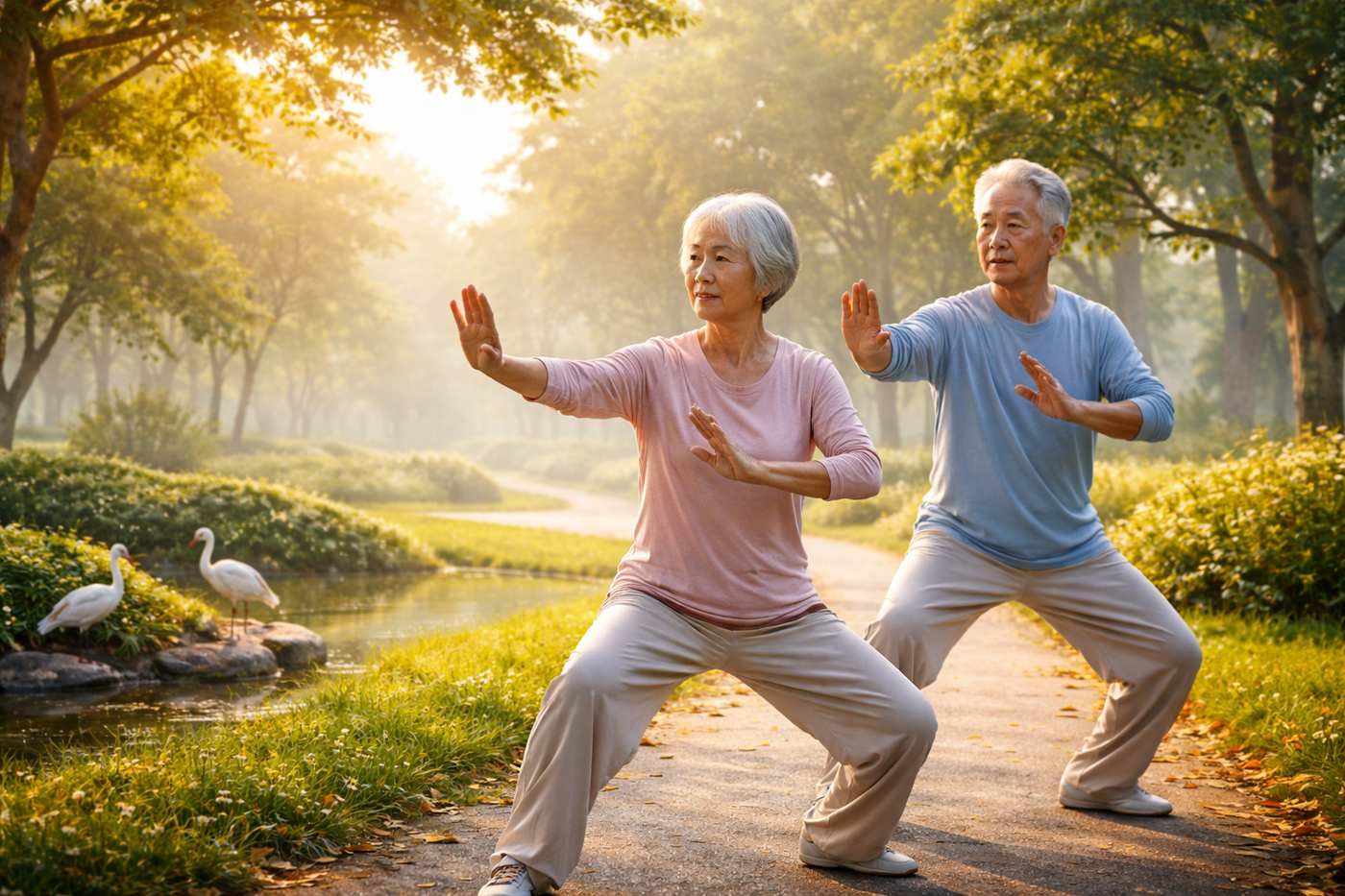
Does Tai Chi Improve Fall Risk and Longevity?
Introduction: Understanding the Impact of Tai Chi Improve Fall Risk and Longevity
Tai chi can improve fall risk and support healthy longevity, especially in older adults, because it trains balance, coordination, leg strength, body awareness, and stress regulation. It is not a guarantee of longer life, but evidence indicates that regular practice can reduce falls, improve mobility, and support healthspan.
TL;DR: Tai chi is one of the most practical low-impact exercises for older adults because it improves balance, strength, and confidence in movement, which can lower fall risk. It may also support longevity indirectly by improving mobility, stress resilience, cardiovascular health, and independence.
Tai chi stands out because it combines gentle movement, posture control, breathing, and attention. That makes it useful not only for physical stability, but also for mental focus and autonomic balance. For many adults, especially those concerned about aging well, it is a sustainable form of exercise that can be continued for years.
It also fits well into a broader longevity strategy. Falls, frailty, inactivity, and loss of independence are major threats to healthspan in later life. A practice that improves strength, proprioception, and confidence can therefore have an outsized effect on quality of life. Learn more in our complete guide to longevity.
How Tai Chi Influences Fall Risk and Longevity
Can Tai Chi Improve Fall Risk and Longevity Reduce Falls?
Tai chi is best known for its effect on balance. The slow, controlled shifts of body weight train posture, foot placement, joint control, and awareness of the body’s center of gravity. These are the same skills that help prevent slips, trips, and loss of balance in daily life.
Regular practice may also improve proprioception, which is the ability to sense body position and movement. This matters because poor proprioception is common with aging and can increase fall risk. Tai chi challenges that system without the impact or speed of many other exercise forms, which makes it especially appealing for older adults.
Another important benefit is confidence. Many people move less after a fall or near-fall, which can worsen weakness and instability. Tai chi may help break that cycle by improving movement confidence in a safe, progressive way.
How Does Tai Chi Support Healthy Aging?
Tai chi may support longevity less by directly extending lifespan and more by improving the factors that influence long-term health. Research suggests that it can support mobility, lower stress, improve blood pressure regulation, and help preserve functional independence. These effects can make healthy aging more likely.
The practice also encourages consistency. Because tai chi is low impact and adaptable, it is easier for many older adults to sustain than more intense exercise. Long-term adherence is one of the most important parts of any exercise strategy linked to better health outcomes.
Its mind-body aspect may matter too. Tai chi requires attention, rhythm, controlled breathing, and coordinated movement, which may help support cognitive function and emotional regulation. That combination can make it useful for both physical and mental resilience.
Practical Benefits of Tai Chi for Healthy Aging
Balance, Stability, and Everyday Movement
One of tai chi’s most practical benefits is how well it transfers to daily life. The movements reinforce posture, lower-body control, turning, stepping, and weight transfer. These abilities are essential for getting out of a chair, walking on uneven ground, climbing stairs, and recovering from small disturbances before they become falls.
That makes tai chi especially relevant for adults who feel less stable with age but are not suited to high-impact workouts. It builds movement skill gradually, which can help maintain independence without overwhelming joints or recovery capacity.
Strength, Flexibility, and Mobility
Tai chi is gentle, but it still trains the body. Repeated semi-squat positions, controlled transitions, and standing endurance can strengthen the legs and hips. The flowing patterns also improve mobility and range of motion, especially in the ankles, knees, hips, and spine.
These changes may reduce frailty over time. Better lower-body strength and mobility are strongly linked to healthier aging, better walking speed, and lower disability risk. Tai chi does not replace all forms of strength training, but it can be a valuable foundation.
Mental Focus and Stress Regulation
Tai chi also functions as a form of moving mindfulness. The emphasis on breathing, pacing, and body awareness may help reduce chronic stress and improve emotional steadiness. This matters because long-term stress can worsen sleep, inflammation, blood pressure, and metabolic health.
For many people, the mental aspect is one reason tai chi remains sustainable. It does not feel like exercise alone. It can feel restorative, which may improve adherence and indirectly support long-term health.
Scientific Evidence Supporting Tai Chi’s Role in Fall Prevention and Longevity
Research on Tai Chi and Fall Risk Reduction
Evidence consistently suggests that tai chi can reduce fall risk in older adults, particularly when practiced regularly over time. Studies and reviews have shown improvements in balance, postural control, and functional mobility, which are all closely tied to fall prevention.
The likely reason is that tai chi combines several protective qualities at once: lower-body strengthening, slow dynamic balance training, coordination, and attention. Unlike a single isolated exercise, it trains movement as an integrated skill.
This makes tai chi particularly useful for adults who need a safe but effective intervention. It can often be adapted for beginners, people with reduced mobility, or those returning to exercise after inactivity.
Evidence Linking Tai Chi to Increased Longevity
The evidence for direct lifespan extension is less precise than the evidence for fall reduction, but the broader case is strong. Tai chi appears to improve several markers associated with healthy aging, including mobility, blood pressure, stress levels, balance confidence, and physical function. These improvements may indirectly support longer life by reducing risk factors linked to disability and chronic disease.
Research also suggests that tai chi may benefit cardiovascular health, mood, and cognitive performance in some populations. Those effects are relevant to healthspan because they help preserve independence and day-to-day function, not just disease avoidance.
In practical terms, tai chi may be best viewed as a longevity-supportive behavior rather than a stand-alone anti-aging intervention. It works especially well as part of a broader strategy that includes nutrition, sleep, resistance training, and preventive care.
Practical Tips to Incorporate Tai Chi for Better Balance and Longer Life
Getting Started with Tai Chi for Fall Risk and Longevity
The easiest way to begin is to choose a beginner-friendly tai chi class, ideally one designed for older adults or for balance improvement. A qualified instructor can help with posture, pacing, and modifications. That matters because correct movement is part of what makes tai chi effective and safe.
Short sessions are enough to begin. Even 10 to 15 minutes several times per week can build familiarity and confidence. What matters most is consistency rather than intensity. Tai chi tends to work gradually, with benefits accumulating over weeks and months.
It also helps to practice in a calm, uncluttered space with supportive footwear or stable footing. The goal is to build movement quality first, then duration and flow.
Tips for Maximizing Benefits and Staying Safe
Start with simple movements and avoid treating tai chi like a performance. The aim is controlled motion, smooth weight transfer, and relaxed breathing. People with joint pain, balance issues, or chronic conditions may benefit from slower progress or chair-supported versions at first.
To get the most from tai chi, combine it with basic healthy habits: enough protein, regular walking, sleep, and medical follow-up when needed. Tai chi works best when it is part of a broader routine that supports healthy aging.
It is also helpful to measure practical progress. Notice whether standing up feels easier, stairs feel safer, or walking confidence improves. These real-world changes are often more useful than focusing only on perfect form.
References and Resources
Throughout research on Tai Chi Improve Fall Risk and Longevity, the following sources are useful for understanding how tai chi may help reduce falls and support healthy aging:
- CDC – Physical Activity and Fall Prevention
cdc.gov
Explains how physical activity supports balance, mobility, and fall prevention in older adults.
- Harvard Health – Tai Chi and Fall Prevention
health.harvard.edu
Summarizes research suggesting tai chi may help older adults reduce fall risk.
- WHO – Ageing and Longevity
who.int
Provides broader context on healthy aging, physical activity, and long-term health.
- NCBI – Tai Chi and Balance in Older Adults
ncbi.nlm.nih.gov
Reviews clinical evidence on tai chi, balance, and fall prevention in older adults.
- Mayo Clinic – Tai Chi Overview
mayoclinic.org
Offers a practical overview of tai chi and its benefits for balance, flexibility, and stress management.
- WebMD – What Is Tai Chi?
webmd.com
Provides a general summary of tai chi and its potential benefits for health and movement.
- AARP – Benefits of Tai Chi
aarp.org
Discusses tai chi in the context of balance, mental well-being, and older adult health.

- NCCIH – Tai Chi and Qigong
nccih.nih.gov
Covers the evidence base for tai chi and qigong in health promotion and symptom management.
FAQ: Common Questions About Tai Chi, Fall Risk, and Longevity
Frequently Asked Questions
Does tai chi really help reduce fall risk?
Yes, evidence indicates that tai chi can reduce fall risk, especially in older adults, by improving balance, coordination, body awareness, and lower-body strength. It is one of the most accessible low-impact options for people concerned about stability and independence.
Can I start tai chi if I have mobility issues?
Yes. Tai chi can often be adapted for different mobility levels, including slower standing versions or supported forms. A qualified instructor can help tailor movements so the practice remains safe and useful.
How long does it take to see benefits from practicing tai chi?
Many people notice changes in balance, confidence, and movement quality within a few months of regular practice. Benefits usually build gradually, so steady practice matters more than doing long sessions.
Is tai chi effective for increasing lifespan?
Tai chi is better viewed as a practice that supports healthy longevity rather than directly increasing lifespan on its own. It may help by improving fall risk, mobility, stress regulation, cardiovascular health, and independence, all of which contribute to better healthspan.
Conclusion
Tai chi can improve fall risk and support longevity because it strengthens balance, posture, mobility, and movement confidence while also helping regulate stress. Its greatest value may be that it is gentle enough to sustain and broad enough to improve several aspects of healthy aging at once.
For older adults, that makes tai chi especially useful. It can reduce the risk of falls, improve physical function, and help maintain independence, which are some of the most important determinants of healthspan. Practiced consistently, tai chi is one of the most practical and sustainable ways to age more confidently and move more safely.
Find out more information about “Tai Chi Improve Fall Risk and Longevity”
Search for more resources and information: