How Does Kidney Function Decline With Age?
Understanding Kidney Function and Aging
TL;DR: Yes, kidney function often declines gradually with age, but the rate varies widely. Some decline can be part of normal aging, while faster decline is more likely when factors such as high blood pressure, diabetes, obesity, smoking, or kidney-damaging medications are present.
Yes, kidney function often declines with age, but the change is usually gradual and not always a sign of kidney disease. Research suggests that older adults commonly experience a slower filtration rate and reduced kidney reserve over time, although the degree of decline depends heavily on blood pressure, blood sugar control, cardiovascular health, medications, and overall lifestyle.
The kidneys help filter waste, regulate fluids, balance electrolytes, and support blood pressure control. Because these functions affect the whole body, kidney aging matters for long-term healthspan and resilience. Learn more in our complete guide to longevity.
The key point is nuance: some decline may be expected with aging, but a steep decline is not simply something to ignore. Monitoring matters because early kidney changes often cause no symptoms.
What Happens to the Kidneys as We Age?
Aging can affect both kidney structure and kidney function. These changes usually happen slowly and may not be noticeable without blood and urine testing.
### How Do Structural Changes in the Kidneys Occur with Age?
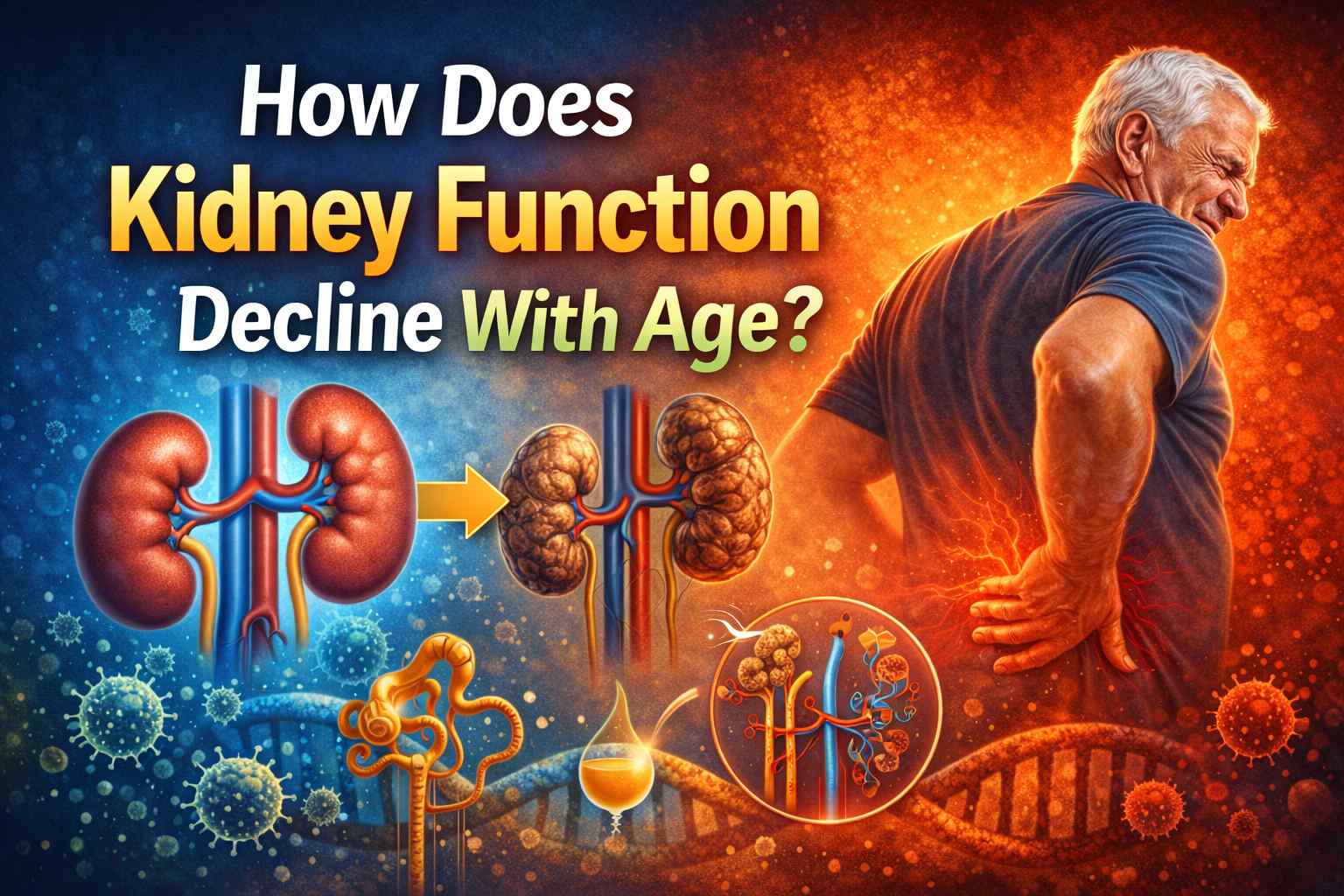
Evidence indicates that the kidneys may lose some filtering units, called nephrons, over time. Kidney tissue can also become less elastic, and the overall filtering surface may gradually decline. These structural changes help explain why older kidneys may have less reserve even when a person feels well.
This does not automatically mean disease is present. It means aging kidneys may be less able to adapt to dehydration, illness, certain medications, or sudden metabolic stress.
### How Does Aging Affect Kidney Blood Flow?
Kidney blood flow often decreases with age. When blood flow declines, filtration can become less efficient, and the kidneys may be less able to clear waste products quickly under stress. This is one reason older adults are often more vulnerable to dehydration, medication side effects, and acute kidney injury during illness.
Reduced blood flow can also interact with other aging-related issues such as high blood pressure, vascular stiffness, and poorer metabolic health.
Does Kidney Function Decline With Age? The Evidence
Yes, evidence indicates that glomerular filtration rate, or GFR, often declines gradually with age. However, the pattern is not identical in everyone, and not every older adult experiences clinically meaningful loss of kidney function.
### How Much Does Kidney Function Decline with Age?
Research often describes a gradual fall in GFR with aging, especially after midlife, but the exact rate varies between individuals. A mild decline may be part of normal aging, while a faster decline is more concerning and may suggest chronic kidney disease, vascular disease, uncontrolled blood pressure, diabetes, or other underlying problems.
This is why a single number rarely tells the full story. Kidney function is better interpreted in context, including creatinine, estimated GFR, urine albumin, blood pressure, medications, hydration status, and general health.
### Why Is It Important to Know How Kidney Function Declines?
Understanding this process helps distinguish normal aging from preventable damage. Kidney decline is often silent in the early stages, so testing is important long before symptoms appear. Detecting changes early can allow better management of blood pressure, diabetes, cardiovascular risk, and medication safety.
This matters for healthy aging because kidney function influences fluid balance, cardiovascular health, blood pressure, medication handling, and overall resilience.
### Are There Symptoms Associated with Declining Kidney Function?
Early kidney decline often causes no clear symptoms. When symptoms do appear, they may include swelling, fatigue, changes in urination, poor appetite, nausea, or difficulty managing blood pressure. These symptoms are not specific, which is why routine testing is more reliable than waiting for warning signs.
In practice, regular checkups are especially important for people with diabetes, hypertension, obesity, cardiovascular disease, or a family history of kidney disease.
Factors That Influence Kidney Aging
Age is only one part of the picture. Several modifiable factors can speed up or slow down kidney decline over time.
### How Do Lifestyle Choices Affect Kidney Aging?
Diet, hydration, smoking status, exercise, and alcohol intake all influence kidney health. A diet high in ultra-processed foods, excess sodium, and poor metabolic quality can contribute to hypertension and poorer kidney outcomes. By contrast, a healthier dietary pattern supports blood pressure, metabolism, and vascular health, all of which matter for the kidneys.
Exercise also plays an indirect but important role by improving cardiovascular function, metabolic health, blood pressure, and body composition. These benefits support healthy aging across multiple organ systems, not just the kidneys.
### The Impact of Chronic Conditions on Kidney Decline
High blood pressure and diabetes are two of the most important drivers of accelerated kidney decline. Poor blood sugar control can damage kidney blood vessels and filtering structures, while high blood pressure can increase pressure inside the kidney’s delicate filtration system.
Obesity, metabolic dysfunction, and cardiovascular disease can also increase kidney strain. These links make kidney aging part of a bigger picture involving metabolism, inflammation, and long-term healthspan.
### How Do Medications Affect Kidney Function in Aging?
Some medications can stress the kidneys, especially in older adults or in people with reduced kidney reserve. Common examples include frequent NSAID use, certain antibiotics, contrast dyes used in imaging, and some combinations of blood pressure medicines and diuretics in the wrong context.
This does not mean these medications are always harmful. It means kidney function should be considered when using them, especially during dehydration, illness, or existing kidney impairment.
How to Support Kidney Health Over Time
Supporting kidney health is mainly about protecting the conditions that kidneys depend on: good blood pressure control, healthy metabolism, adequate hydration, and lower vascular stress.
### Regular Monitoring and Checkups
Routine testing becomes more important with age. Blood tests for creatinine and estimated GFR, along with urine tests for albumin, can help identify early decline before symptoms appear. Regular monitoring is especially useful for anyone with diabetes, hypertension, or a family history of kidney disease.
### Lifestyle Modifications for Kidney Support
A balanced diet, regular exercise, not smoking, maintaining a healthy body weight, and staying hydrated all support kidney health. These habits also help protect blood vessels, metabolism, and cardiovascular function, which are closely linked to kidney aging.
Although kidney health is not usually discussed in terms of mitochondria or endurance as directly as exercise physiology, the same core behaviors that support metabolic health and healthy aging also tend to support the kidneys.
### Managing Chronic Conditions
Good control of blood pressure, blood sugar, and cardiovascular risk is one of the most effective ways to slow kidney decline. For many people, this is the most important practical step because chronic disease often drives faster decline more than aging alone.
### Avoiding Nephrotoxic Substances
Being cautious with frequent NSAID use, unnecessary supplements, dehydration, and other kidney stressors is also important. Before starting new medicines or supplements, it is sensible to consider kidney safety, especially in older age or if kidney function is already reduced.
References and Resources
The following resources provide useful background on kidney aging, kidney disease risk, and practical ways to protect kidney health over time:
Authoritative Sources on kidney function and aging
-
National Kidney Foundation – Aging and Kidney Function
kidney.orgExplains how aging affects kidney structure and function and why monitoring becomes more important over time.
-
CDC – Kidney Disease Overview
cdc.govProvides background on kidney disease, risk factors, and why early detection matters.
-
NEJM – Aging and Kidney Function
nejm.orgA clinical review describing physiological changes in aging kidneys and how to interpret them.
-
UpToDate – Aging and Kidney Function
uptodate.comSummarizes how renal function changes with age and the clinical relevance of those changes.
-
WebMD – Kidney Health and Aging
webmd.comOffers accessible guidance on kidney health, aging, and warning signs to watch for.
-
Mayo Clinic – Kidney Disease Overview
mayoclinic.orgCovers kidney disease stages, symptoms, risk factors, and prevention strategies.
-
NIDDK – Kidney Disease and Aging
niddk.nih.govA useful resource on kidney disease, aging-related risk, and monitoring kidney health over time.

-
Kidney.org – Aging and Kidney Function
kidney.orgA trusted patient resource on how aging influences kidney function and what can help preserve it.
Frequently Asked Questions
Frequently Asked Questions
Does kidney function decline with age always lead to kidney disease?
No. A gradual decline can occur with aging without meeting the criteria for chronic kidney disease. The concern is whether decline is faster than expected, persistent, or accompanied by abnormal urine findings or other risk factors.
What is considered a normal decline in kidney function as we age?
A mild decline in GFR is often described as part of aging, but the rate varies widely. Interpretation is best done using trends over time rather than relying on a single result in isolation.
Can kidney function decline be prevented or slowed down?
It may be slowed in many cases. Good blood pressure control, healthy blood sugar, not smoking, regular exercise, a balanced diet, and avoiding kidney-damaging medications when possible can all help protect kidney function.
What are the signs that kidney function may be declining faster than normal?
Warning signs can include swelling, fatigue, changes in urination, rising blood pressure, and abnormal blood or urine tests. However, early decline often causes no symptoms, which is why routine monitoring is important.
How does declining kidney function affect overall health?
Lower kidney function can affect fluid balance, blood pressure, cardiovascular health, medication handling, and overall resilience. This is why kidney health is an important part of healthy aging rather than a separate issue.
Conclusion
Kidney function often declines gradually with age, but the degree of decline varies and is strongly influenced by blood pressure, diabetes, vascular health, medications, and lifestyle. Some change may be part of normal aging, while faster decline deserves attention and monitoring.
The most practical approach is to stay proactive: monitor kidney function, manage chronic conditions well, protect metabolic and cardiovascular health, and reduce avoidable kidney stressors. These steps can help preserve kidney function and support healthier aging over time.
Find out more information about “kidney function and aging”
Search for more resources and information: