Does Fermented Dairy Improve Longevity?
Does Fermented Dairy Improve Longevity?
TL;DR: Fermented dairy products such as yogurt and kefir are associated with modest reductions in cardiovascular risk and all-cause mortality in observational research, likely through gut health and anti-inflammatory effects. However, direct evidence that fermented dairy extends human lifespan is limited — it appears most beneficial as part of a broader healthy diet rather than as a standalone longevity intervention.
The evidence suggests that fermented dairy — including yogurt, kefir, and certain aged cheeses — may offer meaningful health benefits relevant to longevity, particularly through gut microbiome support and reduced inflammation. That said, the relationship is more nuanced than a simple cause-and-effect. Fermented dairy appears to be one useful component of a longevity-supportive diet, not a decisive factor on its own. For broader context on how dairy fits into longevity nutrition, see our article on whether dairy increases longevity.
What Is Fermented Dairy and Why Does It Matter for Aging?
The Basics of Fermentation
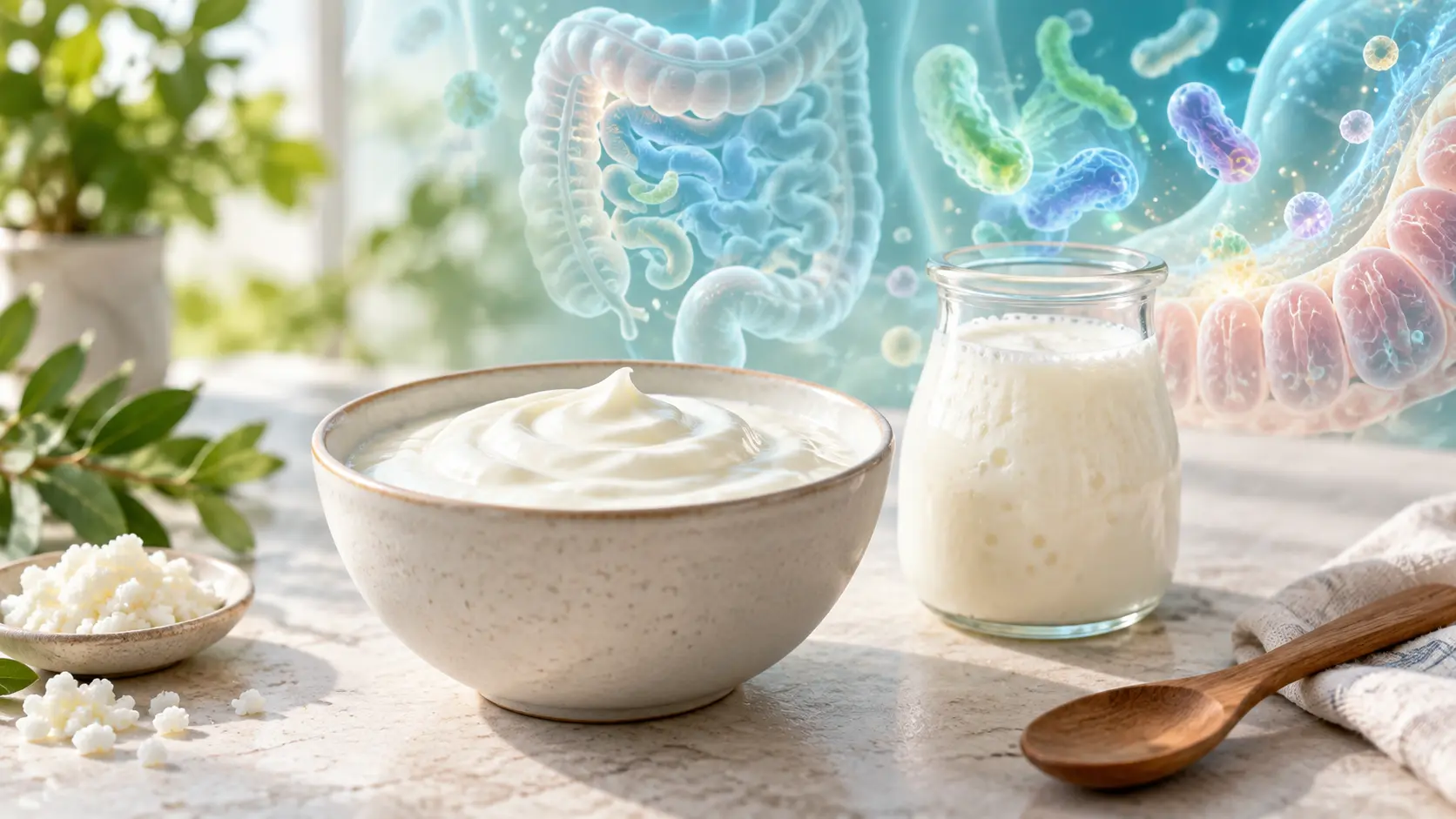
Fermented dairy products are made by introducing live bacterial cultures to milk, which convert lactose into lactic acid. This process changes the nutritional profile of the food — reducing lactose content, increasing bioavailability of certain nutrients, and introducing live probiotic organisms. Common examples include plain yogurt, kefir, aged cheeses such as Gouda and Parmesan, and cultured buttermilk.
What distinguishes fermented from non-fermented dairy, in terms of health relevance, is primarily the probiotic content and altered fermentation byproducts. These factors influence the gut microbiome, which in turn has connections to systemic inflammation, immune function, and metabolic health — all processes closely tied to biological aging.
What the Research Shows
Observational Evidence
Several large observational studies have examined fermented dairy intake and health outcomes. Research suggests that regular yogurt consumption is associated with modest reductions in cardiovascular disease risk, type 2 diabetes incidence, and all-cause mortality. For example, pooled analyses from European cohort studies have found that fermented dairy — particularly yogurt and low-fat fermented products — is associated with lower mortality risk compared to non-fermented dairy, even after adjusting for overall diet quality.
Importantly, these associations tend to be modest and are not consistent across all studies or populations. In contrast to processed meat and high refined sugar intake — where the evidence for harm is stronger and more consistent — the longevity signal for fermented dairy is real but more context-dependent. Learn more in our complete guide to longevity.
Cardiovascular and Metabolic Outcomes
The most consistent findings link fermented dairy to cardiovascular benefits. Research indicates that yogurt and kefir consumption is associated with improved blood pressure, better lipid profiles, and reduced markers of systemic inflammation — all of which are meaningful for healthspan. Some evidence also points to improved insulin sensitivity with regular fermented dairy intake, which is relevant given the role of metabolic dysfunction in accelerated aging.
That said, these are population-level associations. Controlled intervention trials are fewer in number, shorter in duration, and produce more mixed results. The mechanisms are plausible, but human evidence for direct lifespan extension remains absent.
How Probiotics May Influence Aging
Gut Microbiome and Inflammation
One of the primary proposed mechanisms is the influence of fermented dairy on the gut microbiome. A diverse, balanced gut microbiome is increasingly recognised as a marker of healthy aging. As people age, microbial diversity tends to decline — a pattern associated with increased systemic inflammation, sometimes called “inflammaging.” Probiotic-rich foods may help slow or partially counteract this shift.
The probiotics in fermented dairy — particularly Lactobacillus and Bifidobacterium species — can support gut barrier integrity, which in turn limits the passage of inflammatory compounds into systemic circulation. Reduced chronic low-grade inflammation is one of the most consistently cited factors in slowing biological aging, and this is where fermented dairy’s potential contribution is most credible.
Immune Function
Research also suggests that regular probiotic intake may support immune resilience — particularly relevant in older adults, who experience a natural decline in immune function with age (immunosenescence). However, most probiotic studies in this area use concentrated probiotic supplements rather than food sources, so translating this evidence directly to fermented dairy requires some caution. As a result, fermented dairy’s immune effects are promising but not definitively established from food-based studies alone.
Practical Considerations
Which Fermented Dairy Products Are Most Relevant?
Not all fermented dairy is equivalent. Products that retain live bacterial cultures at the point of consumption — plain yogurt, kefir, and some soft fermented cheeses — are most likely to deliver probiotic benefit. Many commercially processed cheeses and heat-treated yogurts do not contain meaningful live cultures.
Plain, unsweetened yogurt and kefir are generally the most practical choices. In practice, choosing products that list live cultures on the label and avoiding added sugars is a reasonable approach. Aged hard cheeses such as Parmesan and Gouda may offer some benefits through fermentation byproducts, though their probiotic content at the point of eating is typically lower than yogurt or kefir.
For those with lactose intolerance, fermented dairy is often better tolerated than unfermented milk due to the partial breakdown of lactose during fermentation. Those with a confirmed dairy allergy should avoid it entirely.
How It Fits Into a Longevity Diet
Fermented dairy makes most sense as part of a broader dietary pattern rather than as an isolated supplement to an otherwise poor diet. Within a Mediterranean-style eating pattern — which is currently the most consistently supported dietary framework for longevity — fermented dairy sits naturally alongside fish, olive oil, legumes, vegetables, and whole grains. For a broader look at how diet quality and food groups connect to longevity outcomes, see our hub on advanced diet and longevity.
A daily serving of plain yogurt or kefir is a low-risk, practically accessible addition for most people. However, it should not crowd out other high-value foods, and it is not a substitute for addressing more impactful dietary factors such as reducing ultra-processed food intake or increasing dietary fibre.
Limitations and Uncertainty
The existing evidence has several important limitations. Most studies are observational, which means confounding is difficult to eliminate — people who eat yogurt regularly may also have healthier overall diets and lifestyles. Randomised controlled trials on fermented dairy and longevity outcomes are limited, and direct evidence of lifespan extension in humans does not currently exist.
Additionally, the overall evidence for dairy and longevity is genuinely mixed. Some studies find neutral or slightly negative associations with high dairy intake, while others find benefits — often depending on the type of dairy, the population studied, and the comparison group. Fermented dairy consistently performs better than non-fermented dairy in these comparisons, but the absolute effect sizes are modest. You can explore the broader dairy picture in our article on whether dairy increases longevity.
Overall, fermented dairy appears to be a useful but not essential component of a healthy diet for aging. The evidence is consistent enough to be worth considering, but not strong enough to position it as a primary longevity strategy.
References and Resources
Authoritative Sources on Fermented Dairy and Longevity
-
Nutrition.gov
US Department of AgricultureProvides comprehensive information on fermented dairy products, probiotics, and their role in health and nutrition.
-
PubMed – National Library of Medicine
nih.govContains peer-reviewed studies on probiotics, gut health, aging, and fermented food research.
-
World Health Organization
who.intOffers guidelines on nutrition, probiotics, and healthy aging relevant to fermented dairy’s role in diet.
-
WebMD
webmd.comProvides accessible summaries of research on fermented dairy, gut health, and aging.
-
American Heart Association
heart.orgDiscusses cardiovascular outcomes associated with dairy consumption and their relevance to healthy aging.
-
SpringerLink – Scientific Journals
springer.comPeer-reviewed articles on probiotics, the gut microbiome, and nutrition science related to aging.
-
American Society for Nutrition
nutrition.orgProvides research reviews on the role of dairy and fermented foods in aging and healthspan.

-
Medical News Today
medicalnewstoday.comSummarises recent findings on fermented dairy, probiotics, and their potential to support healthy aging.
Frequently Asked Questions
Why might fermented dairy support longevity?
Fermented dairy products support gut microbiome diversity, reduce chronic low-grade inflammation, and are associated with modest improvements in cardiovascular and metabolic health markers. These mechanisms are all relevant to healthy aging. However, the effect is most meaningful as part of a balanced diet — fermented dairy alone is unlikely to be a decisive longevity factor.
Can fermented dairy foods really extend my lifespan?
Direct evidence that fermented dairy extends human lifespan does not currently exist. Observational research links regular consumption — particularly yogurt — to modest reductions in cardiovascular disease risk and all-cause mortality. This is a meaningful association, but it falls well short of proof of lifespan extension. Fermented dairy appears most valuable as one component of a consistently healthy dietary pattern.
What are the best fermented dairy products for longevity?
Products that retain live bacterial cultures at the point of consumption are most relevant. Plain yogurt and kefir are the most practical and well-studied options. Unsweetened varieties are preferable to avoid the confounding effects of added sugar. Aged cheeses such as Parmesan and Gouda contain fermentation byproducts but generally lower probiotic counts than yogurt or kefir.
Are there any risks associated with consuming fermented dairy?
For most people, fermented dairy is well tolerated and low risk. Those with lactose intolerance often find fermented dairy easier to digest than unfermented milk due to partial lactose breakdown during fermentation. Individuals with a confirmed dairy allergy should avoid it. As with any food, large amounts of full-fat fermented dairy should be considered in the context of overall calorie and saturated fat intake.
Conclusion
The evidence suggests that fermented dairy — particularly plain yogurt and kefir — offers modest but meaningful health benefits relevant to longevity. The most credible mechanisms involve gut microbiome support, reduced chronic inflammation, and improved cardiovascular and metabolic markers. In observational research, regular fermented dairy consumption is associated with lower all-cause and cardiovascular mortality, though the effect sizes are modest and confounding cannot be ruled out.
In practice, fermented dairy fits naturally within a Mediterranean-style eating pattern — the dietary framework with the strongest current evidence base for healthy aging. It is worth including regularly, but it should be viewed as one useful element among many rather than a primary longevity strategy. Prioritising unsweetened, live-culture products and keeping fermented dairy within a broader diet rich in whole foods, fibre, and minimally processed ingredients is a reasonable, evidence-consistent approach.
Find out more information about fermented dairy and longevity
Search for more resources and information: