
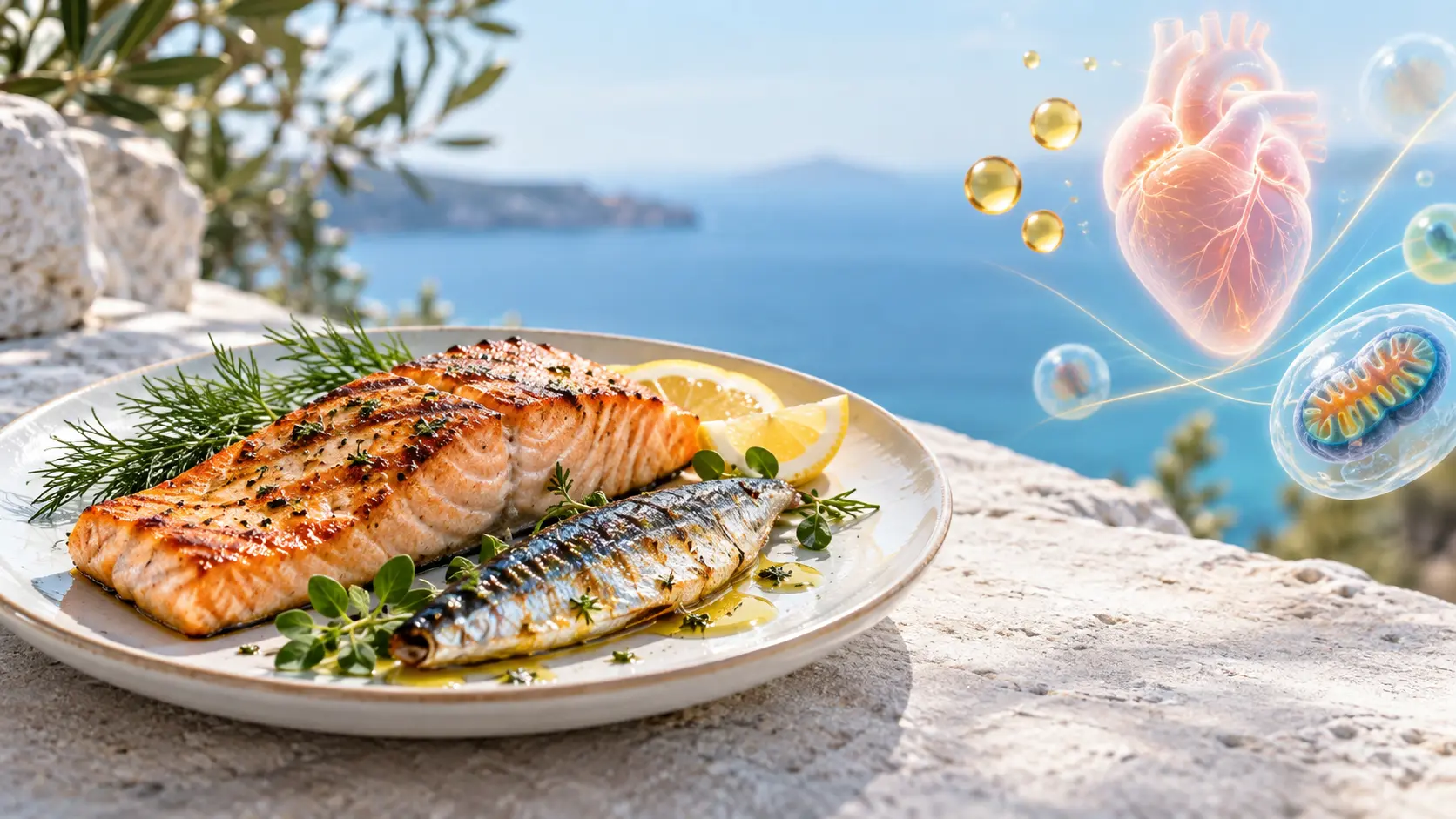
Does Fish Consumption Increase Longevity?
Does Fish Consumption Increase Longevity?
TL;DR: Regular fish consumption — particularly fatty fish rich in omega-3 fatty acids — is consistently associated with lower rates of cardiovascular disease, reduced inflammation, and better cognitive health as people age. While no single food extends human lifespan, the evidence supporting fish as part of a longevity-oriented diet is among the most consistent in nutritional epidemiology.
Evidence consistently links regular fish consumption with a reduced risk of cardiovascular disease, stroke, and age-related cognitive decline — three of the leading contributors to premature death and lost healthspan. Populations with high fish intake, particularly those following Mediterranean or traditional Japanese dietary patterns, tend to show lower rates of chronic disease and greater longevity on average. This association is not explained by fish alone, but fish appears to be a meaningful and well-supported component of a healthy aging diet.
The relationship between fish and longevity is primarily driven by omega-3 fatty acids, though fish also contributes high-quality protein, vitamin D, selenium, and other micronutrients that support aging well. As a result, it features prominently in almost every evidence-based dietary pattern associated with long life. Learn more in our complete guide to longevity.
The Science Behind Fish and Longevity
What the Research Shows
Large-scale epidemiological studies — including analyses from the PREDIMED trial and multiple prospective cohort studies — have found that higher fish intake is associated with meaningfully lower rates of cardiovascular mortality. The Mediterranean diet, which typically includes two or more servings of fish per week, has been linked to reduced all-cause mortality across several well-designed trials.
Research also suggests that regular fish consumption is associated with slower cognitive decline and a reduced risk of dementia in older adults. These findings are plausible mechanistically: the long-chain omega-3 fatty acids EPA and DHA found in fatty fish are incorporated into brain cell membranes and appear to support neuronal function, reduce neuroinflammation, and improve cerebrovascular health.
Importantly, these associations hold across diverse populations, not just those already following Mediterranean-style diets. That said, nutritional epidemiology has inherent limitations — observational data cannot fully separate the effect of fish from other healthy lifestyle factors, and effect sizes are rarely large. The evidence is consistent and biologically plausible, but it should be interpreted with appropriate caution.
For a broader look at how fish fits within overall dietary patterns for healthy aging, see our hub on Advanced Diet and Longevity: What the Evidence Really Shows About Food, Timing, and Eating Patterns.
How Fish May Reduce Disease Risk
The primary mechanisms through which fish appears to support longevity include:
- Reduced systemic inflammation: EPA and DHA help resolve inflammatory signalling pathways. Chronic low-grade inflammation is a central driver of cardiovascular disease, metabolic dysfunction, and accelerated biological aging.
- Improved cardiovascular function: Omega-3s reduce triglycerides, lower resting heart rate, improve endothelial function, and modestly reduce blood pressure — all relevant to cardiovascular mortality risk.
- Brain and cognitive support: DHA is a structural component of neuronal membranes. Higher circulating DHA levels are associated with better cognitive performance and slower age-related brain volume loss.
- Protein quality: Fish provides complete protein with a favourable amino acid profile, supporting muscle maintenance — a key factor in functional longevity as people age.
Key Nutrients in Fish That Support Healthy Aging
Omega-3 Fatty Acids: EPA and DHA
EPA (eicosapentaenoic acid) and DHA (docosahexaenoic acid) are the most studied nutrients in fish in relation to aging and longevity. Both are long-chain polyunsaturated fatty acids that the body cannot synthesise efficiently from plant sources alone — making dietary fish a particularly valuable source.
EPA is primarily associated with cardiovascular and anti-inflammatory effects. DHA, in contrast, is concentrated in the brain and retina, where it supports structural integrity and signalling. Together, these fatty acids appear to reduce chronic inflammation, improve blood lipid profiles, and support organ function over time.
Research suggests that people with higher blood levels of EPA and DHA have lower risks of cardiovascular events and slower cognitive decline. However, omega-3 supplement trials have produced more mixed results than dietary fish studies — indicating that whole-food sources may offer additional benefits beyond the fatty acids themselves.
Supporting Nutrients: Vitamin D, Selenium, and Protein
Beyond omega-3s, fatty fish is one of the few natural dietary sources of vitamin D — a nutrient with broad roles in immune regulation, bone health, and cardiovascular function. Vitamin D deficiency is common in older adults and associated with increased mortality risk in several large studies.
Selenium, found in meaningful amounts in fish such as tuna and cod, supports antioxidant enzyme systems and thyroid function, both relevant to healthy aging. High-quality protein from fish also supports muscle protein synthesis and helps preserve lean mass — an important but often overlooked aspect of functional longevity.
Which Fish Are Most Beneficial?
Fatty fish consistently show the strongest associations with health outcomes in the research. Options such as salmon, mackerel, sardines, anchovies, and herring contain the highest concentrations of EPA and DHA per serving. These are also the fish most closely linked to the cardiovascular and anti-inflammatory effects seen in epidemiological studies.
Leaner white fish — such as cod, haddock, and tilapia — provide good-quality protein and micronutrients, but contain significantly less omega-3 than fatty species. They still contribute to a healthy diet but are not equivalent to fatty fish in terms of the longevity-relevant nutrients.
Wild-caught fatty fish generally contain higher omega-3 levels than farmed equivalents, though farmed salmon still provides meaningful amounts. Canned options such as sardines and mackerel are cost-effective, widely available, and retain their nutritional value well — making them a practical choice for regular consumption.
The role of fish sits alongside other well-evidenced food groups in a longevity-supporting diet — including olive oil, legumes, and whole grains. For a closer look at one of those comparisons, see our article on whether olive oil increases lifespan.
Practical Guidance: How Much Fish and How Often?
Most major dietary guidelines — including those from the American Heart Association and the NHS — recommend eating at least two portions of fish per week, with at least one being a fatty variety. This level of intake broadly aligns with what the research literature associates with reduced cardiovascular and all-cause mortality risk.
In practice, this could mean incorporating fatty fish into two weekly meals — for example, grilled salmon, tinned sardines on wholegrain bread, or mackerel with vegetables. Variety across the week also helps ensure a broader range of nutrients and reduces exposure to any single contaminant source.
Fish does not need to be expensive or elaborate to be beneficial. Tinned and frozen options are nutritionally comparable to fresh in most cases. The key factor is consistency over time, not any single meal.
Fish consumption is also well-supported within a Mediterranean-style dietary pattern — which combines regular fish intake with olive oil, legumes, vegetables, whole grains, and moderate dairy. This pattern shows stronger and more consistent longevity associations than fish intake in isolation. For more on how individual foods combine into evidence-based dietary patterns, see our article on whether the Mediterranean diet reduces mortality.
Risks, Limitations, and Uncertainty
Mercury and Contaminant Exposure
The most important practical concern with fish consumption is mercury exposure. Larger, longer-lived predatory fish — particularly shark, swordfish, king mackerel, and tilefish — accumulate higher mercury levels and are best limited, especially for pregnant women and young children.
However, for most adults eating two portions of fish per week, the balance of evidence strongly favours the benefits over contaminant risks — particularly when the intake is focused on smaller fatty fish such as sardines, mackerel, and salmon, which tend to have lower mercury levels.
Limitations of the Evidence
Most of the evidence linking fish consumption to longevity comes from observational studies, which cannot prove causation. People who eat fish regularly may also exercise more, smoke less, and follow healthier diets overall — making it difficult to isolate the effect of fish specifically.
Randomised controlled trials on omega-3 supplementation have produced inconsistent results, with some showing cardiovascular benefit and others showing little effect. This may reflect differences between whole-food fish and isolated supplements, but it also introduces uncertainty about the magnitude of fish’s direct effect on lifespan.
Overall, the evidence is sufficiently consistent and biologically plausible to support regular fish consumption as part of a healthy aging diet — but it would be an overstatement to claim that fish alone extends human lifespan.
References and Resources
Authoritative Sources on Fish Consumption and Longevity
-
World Health Organization: Fish and Human Health
who.intProvides comprehensive data on the health benefits of fish consumption and its role in chronic disease prevention across global populations.
-
Nutrition Data: Fish Nutritional Profile
nutritiondata.self.comDetailed nutritional breakdowns for common fish species, useful for comparing omega-3 content and micronutrient profiles across different types.
-
JAMA Internal Medicine: Omega-3s and Cardiovascular Health
jamanetwork.comPeer-reviewed research examining the cardiovascular effects of omega-3 fatty acids and their relevance to mortality risk in large population studies.
Frequently Asked Questions
Does fish consumption truly increase longevity?
Regular fish consumption is consistently associated with lower rates of cardiovascular disease and age-related cognitive decline — two major contributors to premature death. While fish alone does not guarantee a longer life, the evidence supporting it as part of a longevity-oriented diet is among the most robust in nutritional research.

What are the main benefits of fish for healthy aging?
The primary benefits are reduced systemic inflammation, improved cardiovascular function, and support for brain health as people age. These effects are largely attributed to EPA and DHA — the long-chain omega-3 fatty acids found in highest concentrations in fatty fish such as salmon, sardines, and mackerel. Fish also provides high-quality protein, vitamin D, and selenium, all of which support aging well.
Are there risks associated with eating fish regularly?
The main concern is mercury accumulation in larger predatory fish such as shark, swordfish, and king mackerel. For most adults consuming two portions per week — particularly smaller fatty fish with lower mercury levels — the evidence suggests the health benefits clearly outweigh the risks. Varying fish types and choosing sustainably sourced options further reduces potential exposure.
Can omega-3 supplements replace eating fish for longevity?
Omega-3 supplements can raise blood levels of EPA and DHA, but supplement trials have produced more mixed results than whole-food fish studies. This suggests that fish may offer benefits beyond its fatty acid content alone — including protein quality, vitamin D, and selenium. Supplements may be a reasonable option for those unable to eat fish regularly, but whole-food sources are generally preferred where practical.
Conclusion
The evidence supporting regular fish consumption as part of a longevity-oriented diet is consistent and biologically well-grounded. Fatty fish in particular — through its omega-3 fatty acids, high-quality protein, and supporting micronutrients — is associated with meaningfully lower rates of cardiovascular disease, cognitive decline, and all-cause mortality in large-scale research. However, fish is most valuable when viewed as one component of a broader dietary pattern, not as a single solution to aging.
In practice, two or more servings of fatty fish per week — within a diet that also emphasises vegetables, legumes, whole grains, and healthy fats like olive oil — represents the most evidence-supported approach. The association is strongest when fish is part of an overall Mediterranean-style eating pattern rather than consumed in isolation alongside an otherwise poor diet.
Find out more information about fish consumption and longevity
Search for more resources and information: