
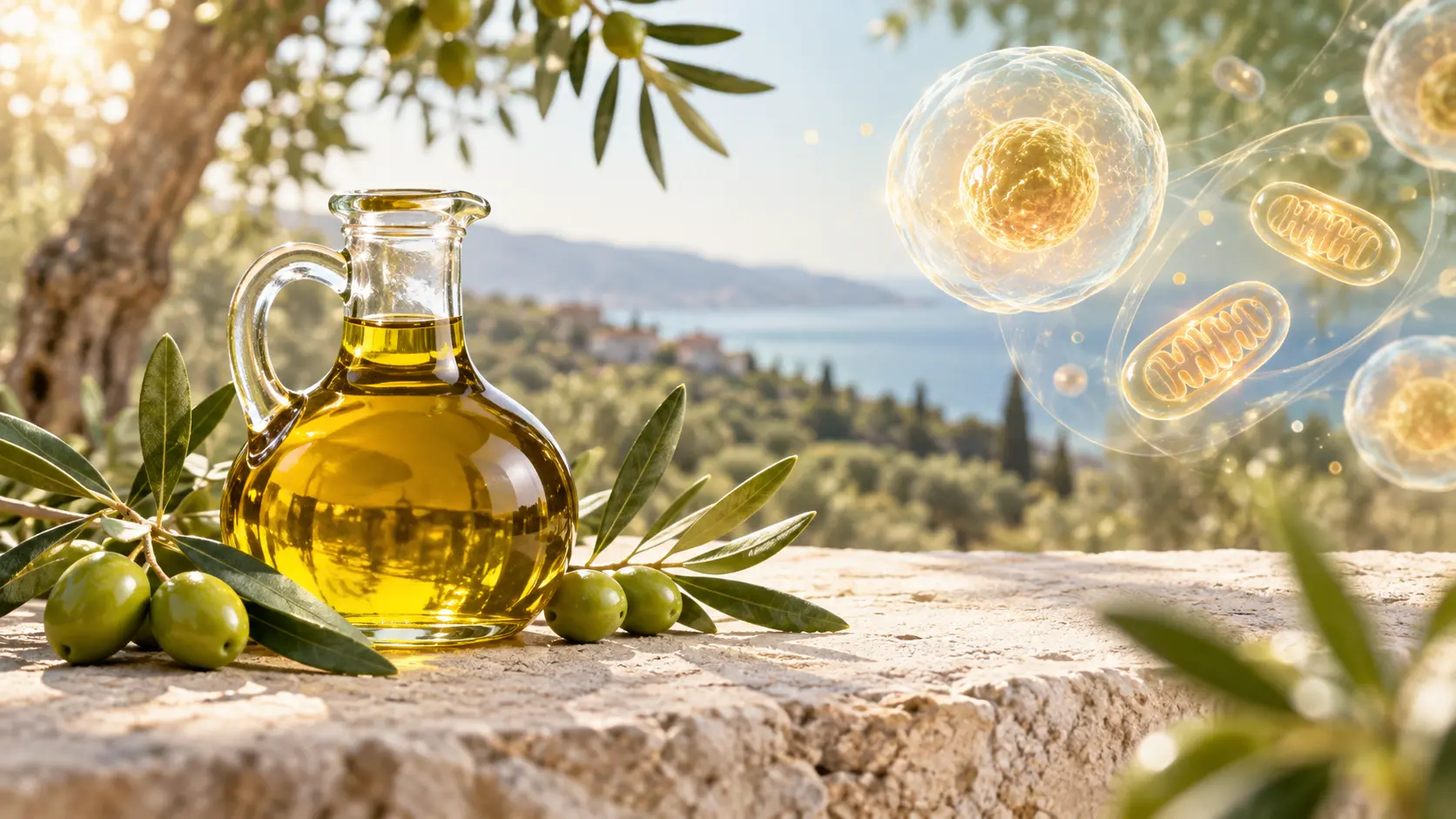
Does Olive Oil Increase Lifespan?
TL;DR: Regular olive oil consumption — particularly extra virgin olive oil — is consistently associated with reduced cardiovascular risk and lower all-cause mortality in large observational studies. However, olive oil appears to work as part of a broader dietary pattern, not as a standalone longevity intervention.
Does Olive Oil Increase Lifespan?
Evidence from large epidemiological studies suggests that higher olive oil consumption is associated with reduced risk of cardiovascular disease, certain cancers, and all-cause mortality. This association is particularly strong within Mediterranean dietary patterns, where olive oil is a primary fat source. That said, the relationship is observational — no controlled trial has directly tested whether olive oil alone extends human lifespan.
What Makes Olive Oil Relevant to Longevity
Key Compounds and Their Biological Effects
Olive oil stands apart from most other cooking fats because of its composition. It is rich in oleic acid, a monounsaturated fatty acid linked to improved endothelial function and reduced LDL oxidation. Extra virgin olive oil (EVOO) also contains a range of polyphenols — including oleocanthal and oleuropein — that have demonstrated anti-inflammatory and antioxidant activity in laboratory and human studies.
Chronic low-grade inflammation is one of the central mechanisms driving biological aging and age-related disease. Oxidative stress, similarly, accelerates cellular damage over time. Both processes are thought to contribute to conditions such as cardiovascular disease, neurodegeneration, and metabolic dysfunction — all of which directly affect healthspan and lifespan.
In this context, olive oil’s polyphenol content is biologically relevant. Oleocanthal, for example, inhibits the same inflammatory enzyme pathways targeted by ibuprofen, though at lower intensity. Research suggests this sustained, low-level anti-inflammatory effect — accumulated over years of regular consumption — may contribute to the mortality benefits observed in population studies.
Olive Oil Within the Mediterranean Diet
Much of the evidence for olive oil’s role in longevity comes from Mediterranean diet research. The PREDIMED trial — one of the largest randomised dietary intervention studies conducted — found that a Mediterranean diet supplemented with extra virgin olive oil significantly reduced major cardiovascular events compared to a low-fat control diet. Cardiovascular disease remains the leading cause of premature death globally, so reductions in this risk are directly relevant to lifespan.
Importantly, olive oil within the Mediterranean pattern is consumed alongside vegetables, legumes, fish, and whole grains. This means separating olive oil’s individual contribution from the overall dietary pattern is difficult. That said, EVOO specifically — rather than mixed nuts, the other supplemented arm — showed the strongest effects in some subgroup analyses. For a broader view of how dietary patterns connect to longevity outcomes, see our article on whether the Mediterranean diet reduces mortality.
What the Evidence Actually Shows
Observational and Intervention Data
Multiple large cohort studies have found that higher olive oil intake is associated with lower all-cause and cardiovascular mortality. A notable 2022 analysis using data from the Nurses’ Health Study and Health Professionals Follow-Up Study found that higher olive oil consumption was linked to lower risk of dying from cardiovascular, respiratory, and neurodegenerative causes, even after adjusting for overall diet quality.
Research also suggests that replacing butter, margarine, or other saturated fat sources with olive oil is associated with improved lipid profiles — specifically lower LDL cholesterol and reduced LDL oxidation — which are relevant to long-term cardiovascular risk.
At the cellular level, polyphenols in EVOO have shown the ability to reduce markers of oxidative damage and modulate inflammatory signalling pathways in human trials, though effect sizes vary and dose-response relationships are not yet fully characterised. Learn more in our complete guide to longevity at longevityinsights.co.uk/what-is-longevity/.
Does Olive Oil Work Through Multiple Pathways?
Current evidence points to several overlapping mechanisms:
- Cardiovascular protection: Oleic acid and polyphenols support endothelial function, reduce arterial inflammation, and improve lipid markers.
- Anti-inflammatory action: Polyphenols such as oleocanthal reduce systemic inflammatory markers in human studies.
- Neuroprotection: Observational data link higher olive oil intake with lower risk of cognitive decline, possibly through reduced neuroinflammation.
- Metabolic health: Some evidence suggests EVOO modestly improves insulin sensitivity, which is relevant to metabolic aging.
These mechanisms are plausible and biologically consistent. However, most human evidence comes from observational data or short-term intervention studies measuring surrogate markers — not direct lifespan outcomes.
How Much Olive Oil Is Useful?
Studies showing the strongest associations typically involve olive oil as a primary dietary fat — used regularly as the main cooking oil and in dressings — rather than as a minor supplement. In the PREDIMED trial, the EVOO group received at least four tablespoons per day. Most observational studies associate benefit with consistent habitual use rather than a precise daily gram target.
In practice, using extra virgin olive oil as the default fat for cooking, dressing, and finishing dishes aligns with the consumption patterns seen in populations with the most favourable outcomes. Refined olive oil, in contrast, loses much of its polyphenol content during processing and is less likely to carry the same benefits.
Olive oil is calorie-dense, so total energy intake remains relevant. However, evidence does not support avoiding olive oil on calorie grounds when it replaces less healthful fats. The substitution effect — replacing saturated or trans fats with olive oil — appears to be part of how the benefit is realised.
For context on how olive oil fits within broader dietary quality questions, see our article on whether extra virgin olive oil reduces inflammation.
Limitations and What We Don’t Yet Know
The main limitation of the olive oil and longevity literature is that most of it is observational. People who consume more olive oil — particularly within Mediterranean countries — also tend to follow other health-promoting behaviours: higher vegetable intake, more physical activity, stronger social networks. Confounding is difficult to eliminate entirely, even with adjustment.
The PREDIMED trial provides the strongest intervention evidence, but it studied people at high cardiovascular risk, using olive oil as a supplement to an existing diet — not as a test of olive oil alone in a general population.
Additionally, most polyphenol studies are short-term and use surrogate markers such as inflammatory proteins or LDL oxidation. Whether these translate to meaningful lifespan extension in humans remains an open question. Current evidence supports olive oil as a consistently beneficial dietary fat within a health-promoting eating pattern — but framing it as a direct lifespan-extending agent goes beyond what the evidence currently supports.
References and Resources
Authoritative Sources on Olive Oil and Longevity
-
Harvard T.H. Chan School of Public Health – Olive Oil
hsph.harvard.eduA research-grounded overview of olive oil’s role in cardiovascular health and dietary fat quality, drawing on major epidemiological studies.
-
World Health Organization – Diet and Nutrition
who.intGlobal dietary guidance contextualising fat quality, healthy eating patterns, and chronic disease prevention.
-
NCBI – Mediterranean Diet and Longevity
ncbi.nlm.nih.govA scientific review examining how olive oil consumption within the Mediterranean dietary pattern correlates with reduced chronic disease risk and improved longevity outcomes.
-
Olive Oil Times – Research and Trends
oliveoiltimes.comIndustry reporting and summaries of ongoing research into olive oil’s health properties, including polyphenol content and quality grading.
-
NCBI – Polyphenols and Aging
ncbi.nlm.nih.govResearch into the mechanisms by which dietary polyphenols — including those found in extra virgin olive oil — may reduce oxidative stress and modulate aging-related pathways.
-
American Heart Association – Monounsaturated Fats
heart.orgEvidence-based guidance on the cardiovascular effects of monounsaturated fats, the primary fat type in olive oil.
-
The Lancet – Diet and Aging
thelancet.comA comprehensive review of dietary patterns and their relationship to aging trajectories and lifespan, including the role of fat quality.
Frequently Asked Questions
Does olive oil actually increase lifespan?
Large observational studies consistently link higher olive oil consumption with lower all-cause and cardiovascular mortality. However, these are associations rather than proof of direct causation. Olive oil appears to support longevity as part of a broader healthy dietary pattern — particularly a Mediterranean-style diet — rather than as a standalone intervention.
How much olive oil is associated with health benefits?
Research suggests that using olive oil as a primary dietary fat — roughly equivalent to several tablespoons daily — is associated with the most consistent benefits. The PREDIMED trial used at least four tablespoons of extra virgin olive oil per day as the intervention dose. In practice, consistent habitual use matters more than hitting a precise daily target.
Is extra virgin olive oil better than regular olive oil for longevity?
Extra virgin olive oil retains significantly higher levels of polyphenols compared to refined olive oil, which loses much of its antioxidant content during processing. The anti-inflammatory and cardiovascular benefits observed in research are most consistently linked to EVOO specifically. For longevity-relevant effects, quality matters.
Are there any downsides to consuming olive oil regularly?
Olive oil is calorie-dense. Consuming it in very large amounts without adjusting total energy intake could contribute to excess calorie consumption. That said, when olive oil replaces less healthful fats — such as butter or partially hydrogenated oils — the substitution effect is generally beneficial. Moderate, consistent use within a balanced diet carries little meaningful risk for most people.
Conclusion
The evidence linking olive oil — particularly extra virgin olive oil — to improved cardiovascular outcomes and reduced all-cause mortality is among the most consistent in nutrition research. Its polyphenol content, anti-inflammatory properties, and favourable fat composition provide plausible biological mechanisms for these associations.
That said, olive oil works best as a component of a coherent dietary pattern rather than as a supplement added to an otherwise poor diet. The mortality benefits observed in Mediterranean diet research reflect the full pattern: olive oil alongside vegetables, legumes, fish, and minimal ultra-processed food. Replacing lower-quality fats with extra virgin olive oil is a practical, evidence-supported step — but it is one piece of a larger picture.
Find out more information about olive oil and lifespan
Search for more resources and information: