How Do Histones Affect Aging?
How Histones Affect Aging
TL;DR: Histones are proteins that help package and regulate DNA, and their chemical modifications change in ways that dysregulate gene expression as we age. These shifts contribute to genomic instability, impaired DNA repair, and increased risk of age-related disease — making histone regulation one of the key molecular mechanisms underlying biological aging.
Yes, histones do affect aging — and the evidence for this is well established at the molecular level. As histone modifications become dysregulated over time, the result is disrupted gene expression, reduced genomic stability, and impaired cellular maintenance. These changes are not incidental; they are considered a core feature of the epigenetic aging process.
Understanding how histone regulation changes with age helps clarify why cells become progressively less functional — and why this matters for healthspan, not just lifespan. For broader context on how these mechanisms fit into the wider picture of biological aging, see our guide to DNA repair and epigenetic aging.
What Histones Are and Why They Matter
The Basic Role of Histones
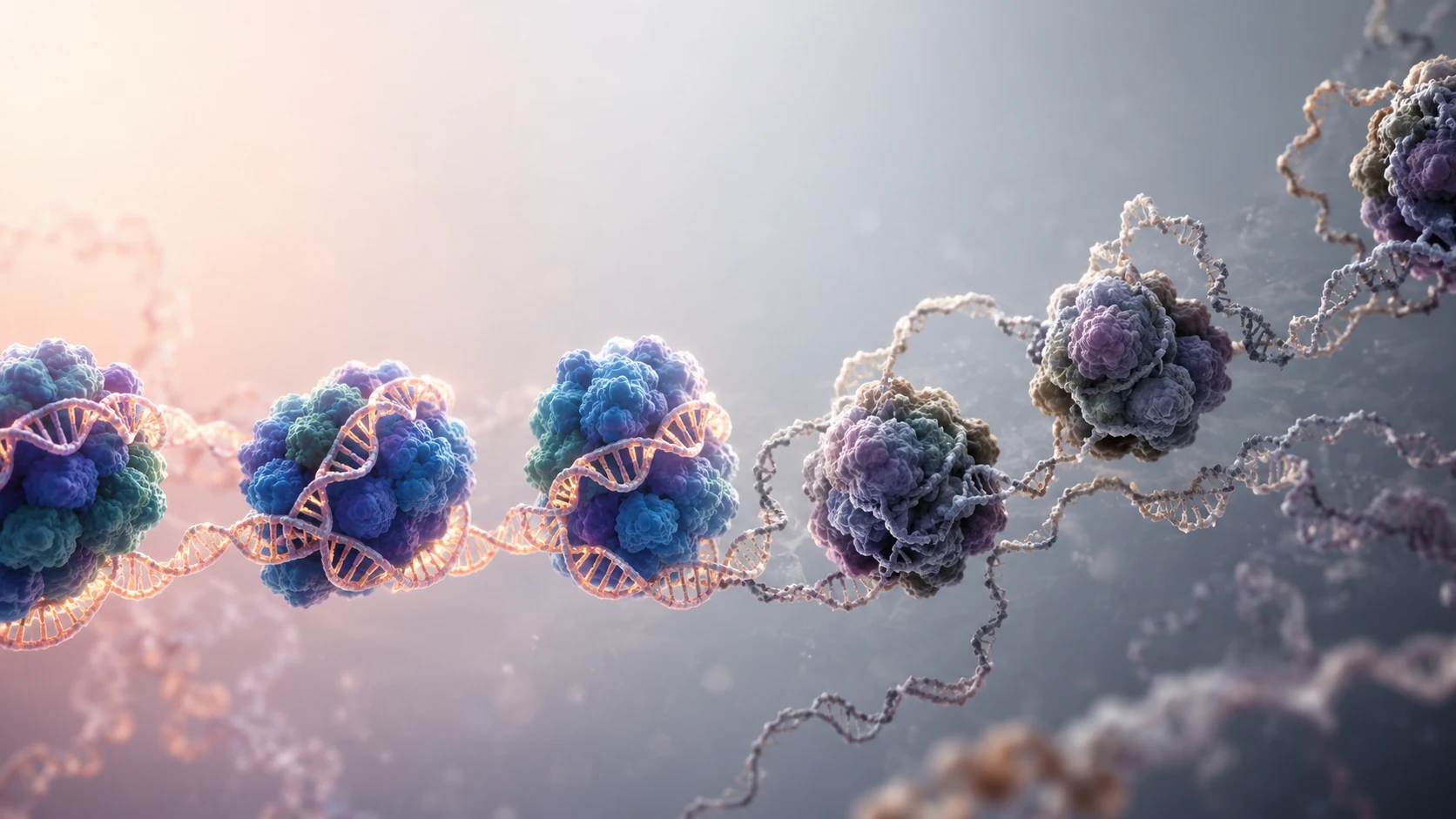
Histones are proteins around which DNA is wound, forming a structure called chromatin — the compact, organised form of our genetic material inside the cell nucleus. This packaging is not passive. Instead, chromatin structure actively determines which genes are accessible to be read, copied, or repaired at any given time.
In practice, histones function as a control layer above the DNA sequence itself. Chemical modifications to histones — including methylation, acetylation, and phosphorylation — act as molecular signals that either open or close regions of chromatin. As a result, these modifications influence which genes are switched on or off in a given cell type at a given time.
This system of histone-based gene regulation is a central part of epigenetics. Importantly, it operates without changing the underlying DNA sequence. However, when this system breaks down — as research suggests it does during aging — the consequences for cellular health can be significant. Learn more in our complete guide to longevity.
How Histone Modifications Change With Age
Dysregulation of Histone Marks
Research consistently shows that the pattern of histone modifications shifts as cells age. In younger, healthy cells, histone marks are tightly regulated and reflect a stable, well-organised chromatin state. With age, this regulation becomes progressively less precise.
Specifically, evidence indicates a general loss of repressive histone marks — particularly those associated with keeping certain genomic regions silent — alongside inappropriate gain of activating marks in others. The overall effect is a more disorganised chromatin landscape, where genes that should be suppressed may become active, and genes important for cellular maintenance may become silenced.
This phenomenon overlaps closely with epigenetic drift — the gradual, stochastic loss of epigenetic patterning that accumulates across the lifespan. Histone dysregulation is a key contributor to that drift.
Histone Loss and Chromatin Instability
Beyond modifications, the total amount of histone protein itself can decline with age. Studies in model organisms suggest that histone depletion leads to instability in chromatin structure, reducing the cell’s ability to maintain organised gene regulation and respond effectively to DNA damage.
This matters because chromatin organisation directly affects DNA repair. When histones are depleted or replaced by variant forms that function suboptimally, DNA repair enzymes and transcription factors may have difficulty accessing the genome. As a result, DNA damage accumulates more readily — a well-recognised hallmark of cellular aging.
The Connection to DNA Methylation Aging
Histone changes do not occur in isolation. They interact closely with DNA methylation — another key layer of epigenetic regulation. The two systems influence each other, and both become dysregulated during aging. Epigenetic clocks, which estimate biological age using DNA methylation patterns, partially reflect these broader chromatin-level changes. For a focused explanation of that process, see our article on what DNA methylation aging means.
The Link Between Histone Changes and Age-Related Disease
Inflammation and Senescence
Aberrant histone modifications are linked to several features of biological aging. One of the most significant is chronic low-grade inflammation — sometimes called inflammaging — which is associated with altered gene expression driven partly by histone dysregulation. Genes involved in inflammatory signalling pathways can become inappropriately activated when their chromatin context changes with age.
Histone changes are also implicated in cellular senescence — the state in which cells stop dividing but remain metabolically active and secrete inflammatory signals. Senescent cells alter their histone landscape substantially, contributing to a dysfunctional local environment that promotes further tissue deterioration.
Cancer, Neurodegeneration, and Cardiovascular Disease
Abnormal histone modification patterns have been observed in age-associated diseases including cancer, Alzheimer’s disease, and cardiovascular conditions. In cancer, for example, loss of certain histone marks can silence tumour suppressor genes or activate oncogenes. In neurodegeneration, histone changes may impair neuronal gene expression and resilience.
That said, it is important not to overstate the causal picture. In many cases, histone changes co-occur with other cellular deterioration rather than acting as a single upstream driver. The relationships are complex and not yet fully resolved in human studies.
Can Lifestyle or Therapy Influence Histone Regulation?
Lifestyle Factors and Histone Marks
Research suggests that several modifiable lifestyle factors can influence histone modification patterns, at least to some degree. Caloric restriction, for example, has been shown in animal models to preserve more youthful histone mark patterns and support genomic stability. Similarly, regular exercise appears to promote beneficial epigenetic changes, including at the histone level, though the magnitude and durability of these effects in humans remain an active area of study.
Nutrients such as folate, B vitamins, and polyphenols from plant foods contribute to the availability of methyl groups and acetyl groups used in histone modifications. In practice, this means that diet quality may have meaningful downstream effects on chromatin regulation over time — though this should not be overstated as a direct anti-aging mechanism in isolation.
Sleep also plays a role. Evidence indicates that sleep deprivation disrupts epigenetic regulation, including histone acetylation patterns, and that consistent, adequate sleep supports the cellular processes needed to maintain genomic integrity.
Emerging Therapeutic Approaches
One of the most studied classes of epigenetic drugs is histone deacetylase (HDAC) inhibitors, which prevent the removal of acetyl groups from histones. By maintaining a more open chromatin state, these drugs can restore expression of genes that become inappropriately silenced with age. Several HDAC inhibitors are already approved for use in certain cancers.
Histone methyltransferase inhibitors represent another area of active investigation. However, it is important to recognise that these therapies are still largely experimental in the context of aging. Most human evidence comes from cancer research rather than longevity trials. The idea that pharmacologically targeting histone marks could broadly slow aging in healthy people is promising but not yet supported by clinical evidence.
Overall, the most actionable current approach remains consistent lifestyle fundamentals — not because they are a complete solution, but because they represent the best-evidenced, lowest-risk way to support epigenetic health across the lifespan.
References and Resources
Authoritative Sources on Histones and Aging
-
Epigenetics and Aging: The Role of Histone Modifications
NCBI – PubMed CentralA comprehensive review of how histone modifications influence aging and age-related disease, covering the core epigenetic mechanisms involved.
-
Histone Dynamics and Longevity
NatureExamines the relationship between histone dynamics and lifespan extension, highlighting potential therapeutic targets in aging research.
-
Epigenetic Regulation of Aging by Histone Modifications
Cell – Trends in Cell BiologyA detailed exploration of how histone modifications shape aging trajectories and what potential interventions may exist.
-
Epigenetic Therapies and Aging
Aging-US.comCovers emerging therapies targeting histone modifications, with an emphasis on their potential to support healthy aging.
-
National Institute on Aging: Epigenetics and Aging
NIA.nih.govA government resource providing accessible coverage of epigenetics research, including the role of histones in the aging process.
-
Histone Modifications as Therapeutic Targets
Trends in Biochemical SciencesReviews the potential of targeting histone-modifying enzymes to combat aging and age-associated disease.
-
Research on Histones in Cellular Senescence
PubMedExplores how histone alterations contribute to cellular senescence and what this may mean for anti-aging strategies.

-
Experimental Cell Research Journal
ElsevierA peer-reviewed journal featuring ongoing research on histone modifications and the cellular mechanisms underlying aging.
Frequently Asked Questions
How do histones influence the aging process?
Histones regulate which genes are active or silenced through chemical modifications to their surface. With age, these modification patterns become dysregulated, leading to inappropriate changes in gene expression. This impairs DNA repair, increases genomic instability, and contributes to the gradual loss of cellular function associated with biological aging.
Can modifying histones slow down aging?
Research in animal models suggests it may be possible to restore more youthful histone modification patterns using epigenetic drugs such as HDAC inhibitors. However, human evidence is limited, and these approaches remain largely experimental in the context of aging. Lifestyle factors such as diet and exercise offer a more established, lower-risk means of supporting histone regulation.
Do histone changes contribute to age-related diseases?
Yes. Abnormal histone modification patterns have been associated with cancer, Alzheimer’s disease, and cardiovascular conditions. In many cases, these epigenetic disruptions alter the expression of genes involved in protection, repair, or inflammation — contributing to disease progression over time.
What lifestyle factors influence histone modifications?
Diet, exercise, and sleep all appear to influence histone regulation. Caloric restriction has shown benefits in animal studies. Regular physical activity is associated with favourable epigenetic changes. Nutrients that support methylation and acetylation reactions — including B vitamins and plant-based polyphenols — may also matter. That said, the human evidence is still developing, and no single lifestyle factor should be viewed as a definitive solution.
Are there therapies targeting histones for aging?
HDAC inhibitors and histone methyltransferase inhibitors are being actively studied. Some are already used clinically in cancer treatment. Their potential application in healthy aging is an emerging area of research, but clinical evidence specifically for longevity or healthspan extension in humans is not yet established. This remains a promising but early-stage field.
Conclusion
Histones do affect aging — and the mechanism is well grounded in epigenetic science. As histone modification patterns become dysregulated over time, the downstream consequences include altered gene expression, reduced DNA repair capacity, and increased genomic instability. These changes are not peripheral to the aging process; they are central to it.
In practice, the most evidence-based way to support histone regulation remains consistent with broader lifestyle fundamentals: a nutrient-rich diet, regular exercise, adequate sleep, and avoiding chronic stress. Emerging therapeutic approaches targeting histone-modifying enzymes are scientifically interesting, but human evidence for their use in healthy aging is limited. That distinction matters when evaluating what is actionable now versus what may become relevant in the future.
For those wanting to understand how histone changes connect to the wider landscape of DNA repair and biological aging, our hub on DNA repair and epigenetic aging provides a broader framework for that context.
Find out more information about how histones affect aging
Search for more resources and information: