
Does Alpha-ketoglutarate Extend Lifespan?
TL;DR: Alpha-ketoglutarate (AKG) has extended lifespan in animal models and shows plausible mechanisms relevant to aging, but robust human evidence is still limited. It may be a useful addition to a longevity strategy, but it is not a substitute for the foundational habits — exercise, nutrition, sleep, and metabolic health — that have the strongest evidence base.
What Is Alpha-Ketoglutarate?
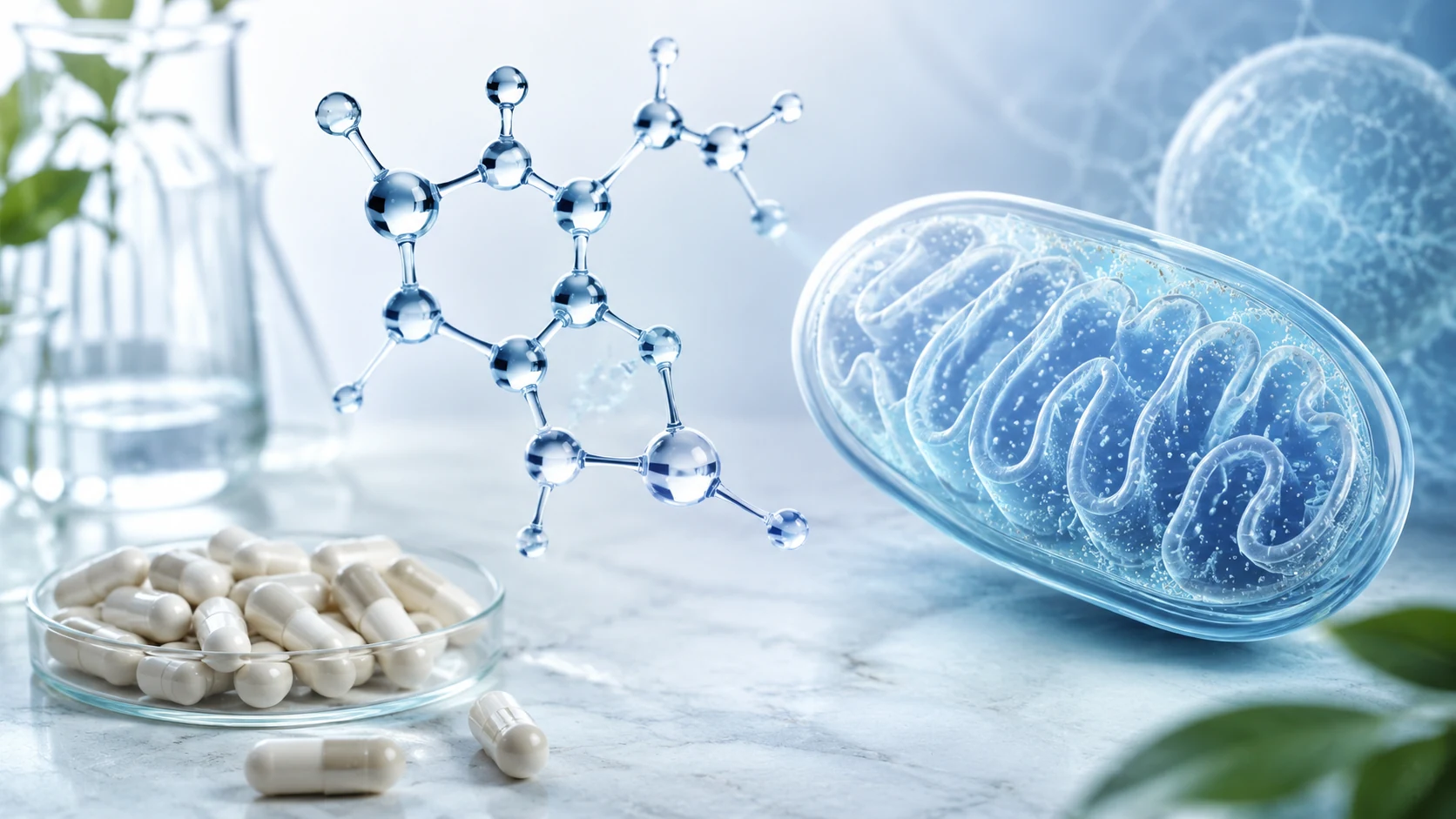
Alpha-ketoglutarate (AKG) is a naturally occurring molecule produced in the body as part of the Krebs cycle — the core metabolic process that generates cellular energy. It sits at a critical junction in metabolism, linking amino acid breakdown, energy production, and mitochondrial function. As a result, it has attracted significant interest in aging and longevity research.
AKG levels decline with age. This decline is thought to contribute to reduced cellular energy capacity, impaired nitrogen balance, and increased systemic inflammation — all of which are associated with biological aging. Supplementing with AKG aims to restore or maintain levels that support healthier cellular function.
For a broader look at how mitochondrial health connects to longevity, see our article on Mitochondrial Health for Longevity.
How AKG Works: Key Biological Mechanisms
Mitochondrial Energy and the Krebs Cycle
AKG is an intermediate in the Krebs cycle, which takes place inside mitochondria. It plays a direct role in producing ATP — the body’s primary energy currency. Importantly, it also acts as a precursor to glutamate, an amino acid involved in neurotransmitter function and nitrogen detoxification.
Epigenetic Regulation
One of the more compelling mechanisms involves epigenetic regulation. AKG is a required co-factor for a class of enzymes called TET demethylases and histone demethylases, which influence how genes are expressed without altering the DNA sequence itself. Epigenetic changes — including altered methylation patterns — are considered one of the hallmarks of aging. Research suggests that AKG availability can influence these patterns, potentially slowing age-related epigenetic drift.
mTOR Inhibition and AMPK Activation
Evidence from animal models indicates that AKG can inhibit mTOR signalling — a pathway associated with cellular growth and aging — while also activating AMPK, which promotes cellular repair and metabolic efficiency. These are the same pathways targeted by caloric restriction and exercise, which helps explain why AKG has generated interest as a longevity compound.
Inflammation and Oxidative Stress
AKG also appears to reduce markers of inflammation and oxidative stress in preclinical studies, both of which are closely linked to accelerated aging and age-related disease. However, translating these effects reliably to humans remains an ongoing area of investigation.
Scientific Evidence: Animal Studies
The most compelling evidence for AKG and lifespan extension comes from animal studies. In C. elegans (a commonly used model organism), AKG supplementation has been shown to extend lifespan by inhibiting mTOR and reducing cellular respiration in a way that appears protective rather than harmful.
A notable mouse study published in 2020 in Cell Metabolism found that calcium alpha-ketoglutarate (Ca-AKG) extended median lifespan in older mice by approximately 12%, with females showing a stronger response. Importantly, the treatment was administered in mid-to-late life, which is practically significant — it suggests potential benefit even when started later rather than from youth.
In these animal models, AKG supplementation was also associated with reduced frailty, lower inflammation markers, and preserved physical function. That said, mouse and worm studies do not directly predict human outcomes, and the translation of lifespan data across species has historically been inconsistent.
Human Evidence: What Do We Actually Know?
Human evidence on AKG is still limited. A small clinical trial published in Aging (2021) examined the effects of Ca-AKG on biological age as measured by DNA methylation clocks. Participants taking AKG showed a reduction in biological age markers over several months, with some also reporting improvements in physical function and reduced fatigue. However, the trial was small, lacked a placebo control group, and measured surrogate markers rather than hard clinical outcomes.
This means the human data is promising but not yet conclusive. Current evidence supports the idea that AKG influences relevant biological pathways in humans, but it does not yet confirm that supplementation meaningfully extends lifespan or healthspan in a clinical sense. Larger, well-controlled trials are needed.
In contrast to other mitochondrial-focused supplements, AKG’s mechanism — particularly its epigenetic effects — is arguably more directly tied to core aging biology. However, this also makes it harder to assess from short-term studies alone. Learn more in our complete guide to longevity at longevityinsights.co.uk/what-is-longevity/.
Practical Considerations and Safety
Dosage and Form
Most research has used calcium alpha-ketoglutarate (Ca-AKG), typically in doses ranging from 1,000 to 3,000 mg per day. Arginine alpha-ketoglutarate (AAKG) — a different compound more commonly found in sports nutrition products — has a distinct pharmacological profile and should not be considered equivalent.
Safety Profile
AKG is generally considered well tolerated at typical supplemental doses. Gastrointestinal discomfort has been reported at higher doses. As with most supplements, individuals with kidney disease, metabolic disorders, or those taking medications that affect nitrogen metabolism should consult a healthcare provider before use.
Where It Fits in a Longevity Strategy
AKG is best understood as a potential add-on to an already solid foundation. Exercise — particularly aerobic training and resistance training — remains the most evidence-supported intervention for mitochondrial health, insulin sensitivity, and biological aging. Nutrition, sleep, and weight management are similarly foundational. AKG may complement these habits, but it is unlikely to compensate for their absence.
For comparison, other mitochondrial supplements such as urolithin A and CoQ10 operate through different mechanisms and vary considerably in the strength of their human evidence.
Does Alpha-Ketoglutarate Extend Lifespan? A Balanced View
Based on current evidence, AKG has genuinely interesting biology. It sits at the intersection of energy metabolism, epigenetic regulation, and inflammation — all processes that are directly relevant to aging. Animal studies showing lifespan extension are credible and mechanistically grounded.
However, the human evidence remains early-stage. Surrogate markers such as biological age clocks are useful research tools, but they are not the same as demonstrated improvements in healthspan or lifespan. The field is moving quickly, and AKG is one of the more scientifically plausible longevity compounds under investigation.
In practice, this means AKG may be worth considering for people who already have their foundational habits in order and are looking to explore evidence-weighted supplementation. It should not be treated as a primary longevity intervention, and expectations should reflect the current state of the evidence — promising but incomplete.
References and Resources
Sources on Alpha-Ketoglutarate and Longevity
-
The Role of Alpha-Ketoglutarate in Aging
ncbi.nlm.nih.govReviews the biochemical pathways of AKG and its relevance to aging processes, including its roles in the Krebs cycle, epigenetic regulation, and inflammation.
-
Alpha-Ketoglutarate and Longevity: Animal Studies
pubmed.ncbi.nlm.nih.govDetails the Cell Metabolism mouse study examining Ca-AKG supplementation and its effects on lifespan, frailty, and inflammation markers.
-
Metabolic Pathways of Alpha-Ketoglutarate
cell.comA review of how AKG influences cellular metabolism, mTOR signalling, and epigenetic regulation — key mechanisms in aging biology.
-
Longevity Research Organization
longevityresearch.orgProvides updates on ongoing clinical trials and emerging research related to longevity compounds including AKG.
-
National Institutes of Health (NIH)
nih.govOfficial source for research guidelines, clinical trial registries, and peer-reviewed literature on supplements and aging-related pathways.
-
Nature Journal
nature.comPeer-reviewed research on aging biology, epigenetics, and cellular metabolism, including studies relevant to AKG and longevity.
-
ScienceDirect
sciencedirect.comAccess to journal articles on AKG’s effects on aging markers, mitochondrial function, and lifespan across experimental models.

-
American Biotechnologist
americanbiotechnologist.comIndustry commentary and research summaries covering longevity compounds and their potential roles in aging therapies.
Frequently Asked Questions
Does alpha-ketoglutarate extend lifespan in humans?
Human evidence is still limited. Animal studies show meaningful lifespan extension, and a small human trial found reductions in biological age markers. However, larger, controlled trials are needed before firm conclusions can be drawn. The science is promising but not yet definitive.
Is alpha-ketoglutarate safe to take?
AKG is generally well tolerated at typical doses (1,000–3,000 mg/day of Ca-AKG). Gastrointestinal discomfort is the most commonly reported side effect at higher doses. Anyone with kidney disease, a metabolic disorder, or who takes relevant medications should consult a healthcare provider before supplementing.
What form of alpha-ketoglutarate is used in longevity research?
Most longevity research has used calcium alpha-ketoglutarate (Ca-AKG). This is distinct from arginine alpha-ketoglutarate (AAKG), which is more common in sports supplements and has a different pharmacological profile. These two forms should not be treated as interchangeable.
Can AKG replace diet and exercise for longevity?
No. AKG is a potential complement to a healthy lifestyle, not a substitute for it. Exercise, nutrition, sleep, and metabolic health have far stronger and more consistent evidence for supporting longevity. Supplements like AKG are best considered once those foundations are in place.
How does AKG relate to mitochondrial health?
AKG is a direct intermediate in the Krebs cycle, which takes place in mitochondria and drives ATP production. It also influences mitochondrial function indirectly through mTOR inhibition, AMPK activation, and reduction of oxidative stress — all of which affect how efficiently mitochondria operate as we age.
Conclusion
Alpha-ketoglutarate is one of the more mechanistically credible longevity supplements currently under investigation. Its roles in the Krebs cycle, epigenetic regulation, mTOR inhibition, and inflammation reduction align closely with key drivers of biological aging. Animal evidence for lifespan extension is genuinely compelling, and early human data on biological age markers is encouraging.
That said, the human evidence remains early-stage. AKG is not a proven longevity intervention in humans, and it is unlikely to produce meaningful benefits in isolation. For most people, the greatest gains in mitochondrial health and healthy aging will still come from consistent exercise — particularly aerobic and resistance training — alongside quality nutrition, sufficient sleep, and good metabolic health.
Used alongside those foundations, AKG may be a reasonable addition for those looking to explore evidence-weighted supplementation. Approach it with realistic expectations, monitor how your body responds, and stay informed as the clinical evidence develops.
Find out more about alpha-ketoglutarate and lifespan extension
Search for additional resources and research: