
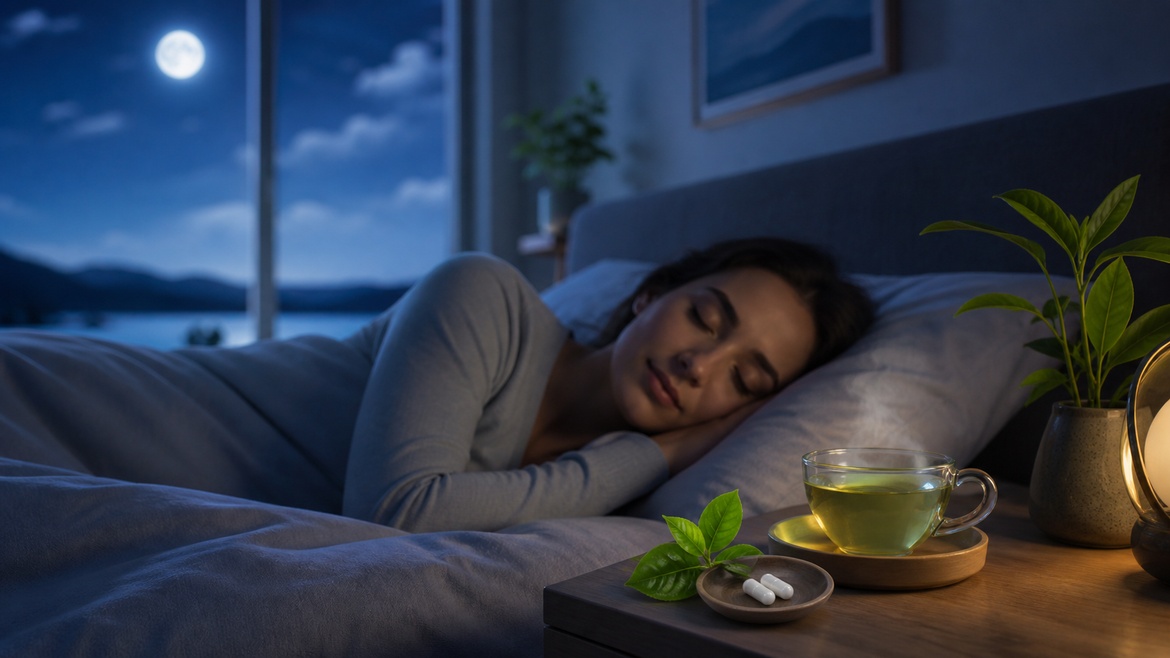
Does L-theanine Improve Sleep?
Does L-Theanine Improve Sleep?
TL;DR: L-theanine may improve sleep quality for some people by reducing stress and promoting relaxation, but it is not a strong sedative. It is most useful when sleep problems are linked to tension, racing thoughts, or difficulty winding down.
L-theanine may help improve sleep quality indirectly by calming the nervous system and making it easier to relax before bed. It does not usually “knock you out” like a sleeping pill, but it may help reduce stress-related sleep disruption and support a smoother transition into sleep.
This makes L-theanine most relevant for people who feel mentally alert, anxious, or overstimulated at night. It is less likely to solve sleep problems caused by untreated sleep apnea, pain, alcohol, irregular sleep timing, or excessive caffeine. For a broader sleep strategy, see our guide to the best sleep protocol for longevity.
Learn more in our complete guide to longevity.
How L-Theanine May Support Sleep
L-theanine is an amino acid found naturally in tea leaves, especially green tea. It is known for promoting a calm, focused state without typical sedative effects. This is why it is often used for stress, relaxation, and sleep support.
For sleep, the key point is that L-theanine may help reduce the mental and physiological arousal that keeps some people awake. If the main barrier to sleep is a busy mind, evening tension, or difficulty switching off, L-theanine may be a useful tool.
It should still be seen as a support, not a cure. The foundation for sleep quality remains consistent sleep timing, morning light exposure, appropriate exercise, reduced evening stimulation, and a dark, cool bedroom. Other sleep-support nutrients are covered in related articles on whether glycine improves deep sleep, whether apigenin is effective for sleep, and whether taurine improves sleep quality.
Scientific Insights and Mechanisms
L-theanine appears to influence brain chemistry in ways that support relaxation. Research suggests it may affect calming neurotransmitters such as GABA, serotonin, and dopamine, while also promoting alpha brain wave activity, which is associated with a relaxed but alert mental state.
This mechanism helps explain why L-theanine may be useful before bed even though it is not a traditional sedative. Instead of forcing sleep, it may reduce the stress response and help the brain shift into a calmer state.
Some studies suggest L-theanine may improve perceived sleep quality, stress resilience, and relaxation. However, the evidence is not strong enough to claim that it reliably improves every sleep metric, such as deep sleep, REM sleep, or total sleep time, in all people.
The practical interpretation is simple: L-theanine is most promising when poor sleep is related to stress or nervous system overactivation. If sleep is poor because of snoring, breathing pauses, restless legs, medication effects, or chronic insomnia, professional assessment may be more important than supplementation.
How to Take L-Theanine for Sleep
A common supplemental dose is 100–200 mg taken around 30–60 minutes before bedtime. Some people may notice effects at lower doses, while others may need a different timing strategy. Starting low is sensible, especially if combining it with other supplements or medications.
L-theanine can also be used earlier in the evening if the goal is to reduce stress before the bedtime routine begins. Taking it too late is not usually a major issue for most people, but individual responses vary.
For best results, pair L-theanine with sleep habits that reinforce the same calming signal:
- Keep bedtime and wake time consistent.
- Dim lights in the final hour before bed.
- Avoid late caffeine and heavy evening alcohol.
- Use a relaxing wind-down routine such as reading, stretching, or breathing exercises.
- Keep the bedroom cool, dark, and quiet.
It is best not to start several sleep supplements at once. Testing one change at a time makes it easier to know whether L-theanine is actually helping.
Potential Benefits and Limitations of L-Theanine for Sleep
The main benefit of L-theanine is that it may support relaxation without causing strong next-day grogginess. It may be especially useful for people who do not want a sedative but still need help calming the mind before bed.
Its limitations are equally important. L-theanine is unlikely to overcome poor sleep habits, untreated sleep disorders, high alcohol intake, irregular work schedules, or chronic stress without broader changes. It should not be presented as a guaranteed sleep solution.
L-theanine is generally well tolerated, but side effects are still possible. Some people may experience headache, digestive discomfort, unusual alertness, or changes in blood pressure. Anyone who is pregnant, breastfeeding, taking medication, or managing a medical condition should speak with a healthcare professional before using it regularly.
References and Resources
The following resources provide useful background on L-theanine, sleep, relaxation, and supplement safety.
Authoritative Sources on L-Theanine and Sleep
-
L-Theanine and Sleep: Scientific Review
ncbi.nlm.nih.govA scientific review exploring how L-theanine may influence stress, relaxation, and sleep-related pathways.
-
The Effects of L-Theanine on Sleep and Stress
pubmed.ncbi.nlm.nih.govResearch examining L-theanine’s effects on stress, relaxation, and sleep-related outcomes.
-
Sleep Foundation on L-Theanine
sleepfoundation.orgA practical overview of how L-theanine may support relaxation and sleep quality.
-
Healthline on L-Theanine Benefits
healthline.comAn accessible summary of L-theanine’s potential benefits, including stress and sleep support.
-
Psychology Today on L-Theanine and Mood
psychologytoday.comDiscusses L-theanine’s possible effects on mood and anxiety, which may indirectly support sleep.
-
Medical News Today on L-Theanine
medicalnewstoday.comA balanced overview of L-theanine, including potential benefits, limitations, and safety considerations.
-
WebMD on L-Theanine
webmd.comA trusted resource for L-theanine uses, side effects, and supplement safety.

Frequently Asked Questions
Frequently Asked Questions
Does L-theanine improve sleep quality?
L-theanine may improve sleep quality for some people by promoting relaxation and reducing stress-related arousal. It is not a sedative, so its effects are usually subtle rather than immediate or forceful.
Can L-theanine help with sleep anxiety?
Yes, it may help if sleep anxiety is linked to racing thoughts or difficulty relaxing. L-theanine appears to support calming neurotransmitter activity, which may make it easier to wind down before bed.
What is the best way to take L-theanine for sleep?
A common approach is 100–200 mg taken 30–60 minutes before bedtime. Starting with the lowest effective dose is sensible, especially if using other supplements or medications.
Are there any side effects of L-theanine?
L-theanine is generally well tolerated, but some people may experience headache, digestive discomfort, changes in alertness, or blood pressure effects. Medical advice is recommended for anyone pregnant, breastfeeding, on medication, or managing a health condition.
Conclusion
L-theanine may improve sleep quality when poor sleep is driven by stress, mental tension, or difficulty winding down. Its main value is helping the body enter a calmer state before bed, rather than acting as a powerful sleeping pill.
For best results, use L-theanine as part of a wider sleep routine that includes consistent timing, reduced evening stimulation, appropriate light exposure, and a sleep-friendly environment. It can be a useful tool, but it works best when the foundations of healthy sleep are already in place.
Find out more information about “does L-theanine improve sleep”
Search for more resources and information: